
One of the last sequel announcements anyone would have ever expected is a good-faith sequel to Bubsy 3D, a punching bag of a video game best known for being a 3D platformer that arrived in the same year as the genre-defining Super Mario 64. Ahead of last year’s news, the developers behind Bubsy 4D were aware. They knew the reaction would be ridiculous.
“We were giggling about it a little bit,” said Fabraz co-lead designer and programmer Ben Miller. “We’re going to make you play a Bubsy game!”
They had good reason to expect people would be interested. Atari decided to pair a maligned and meme-driven platforming franchise like Bubsy with Fabraz, the idiosyncratic studio behind the genre-pushing platformers Demon Tides and Demon Turf. It was a deliberate sucker punch, a way to grab platforming fans by the collar and FOMO-dare them to not try their take on Bubsy.
Their take on Bubsy is part of a fairly new but exciting subgene that’s been dubbed by Bubsy 4D’s other co-lead designer, Fabian Rastorfer, as an “expressive platformer.” The definition of a platformer is often enjoyable fuzzy—it’s an idea we're currently exploring as part of a project to slowly but surely rank every platformer ever made—but if the core verb of a platformer is to “jump,” an “expressive platformer” takes that idea and runs in the direction of movement depth.
Fabraz came up with their own definition a few years back:
“An emergent genre that offers approachable gameplay while hiding deep mechanical depth in their move-set; allowing the player to ‘express’ themselves through their movement and navigating through levels in creative ways.”
“In some ways, the most video gamey thing that you can do is just focus on the movement itself and nothing else,” said Rastorfer. “No fluff, no extra layers, no extra depth. The very first thing you do is move the character, and we'll make that feel as good as we humanly can. There’s something enticing about that.”
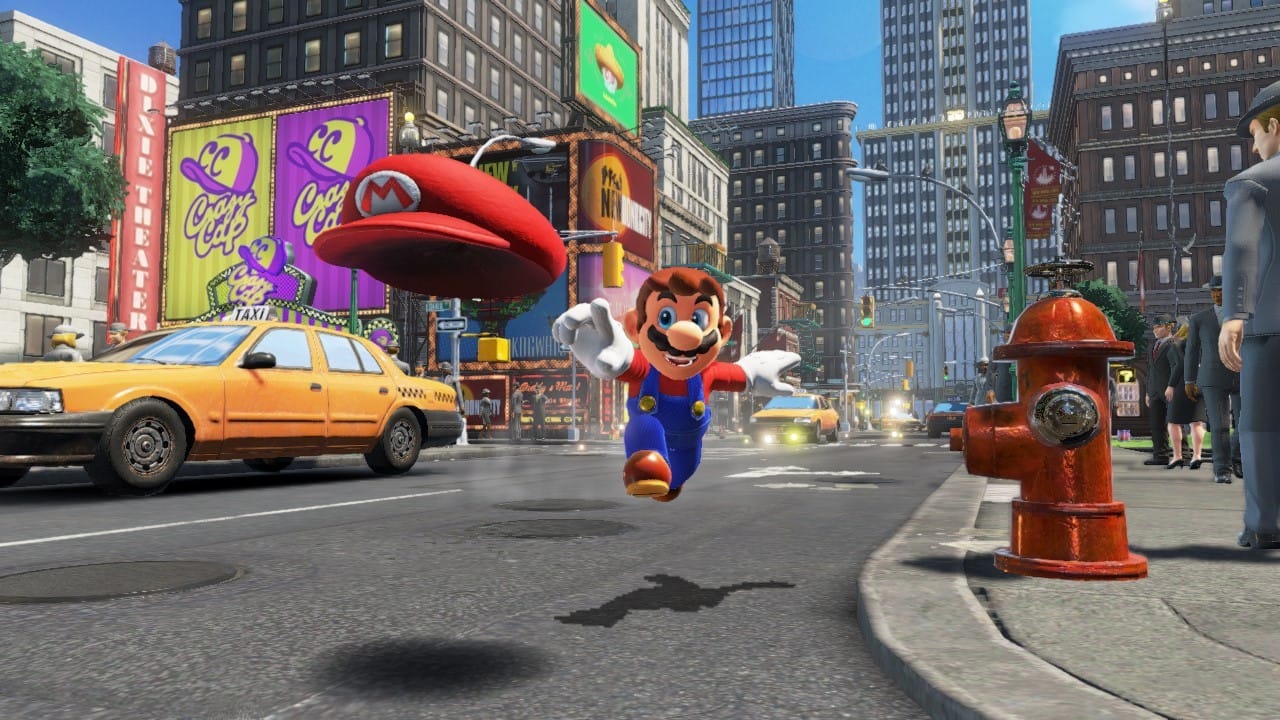
Fabraz credits Super Mario Odyssey as the most mainstream example of an expressive platformer, a game with the most expansive moveset in a Mario game. Players can “reset” movement mid-flight by tossing their cap—but most people can safely mostly ignore that.
“It's this little trick, or rewarding sense of discovery, for a lot of people,” said Miller.
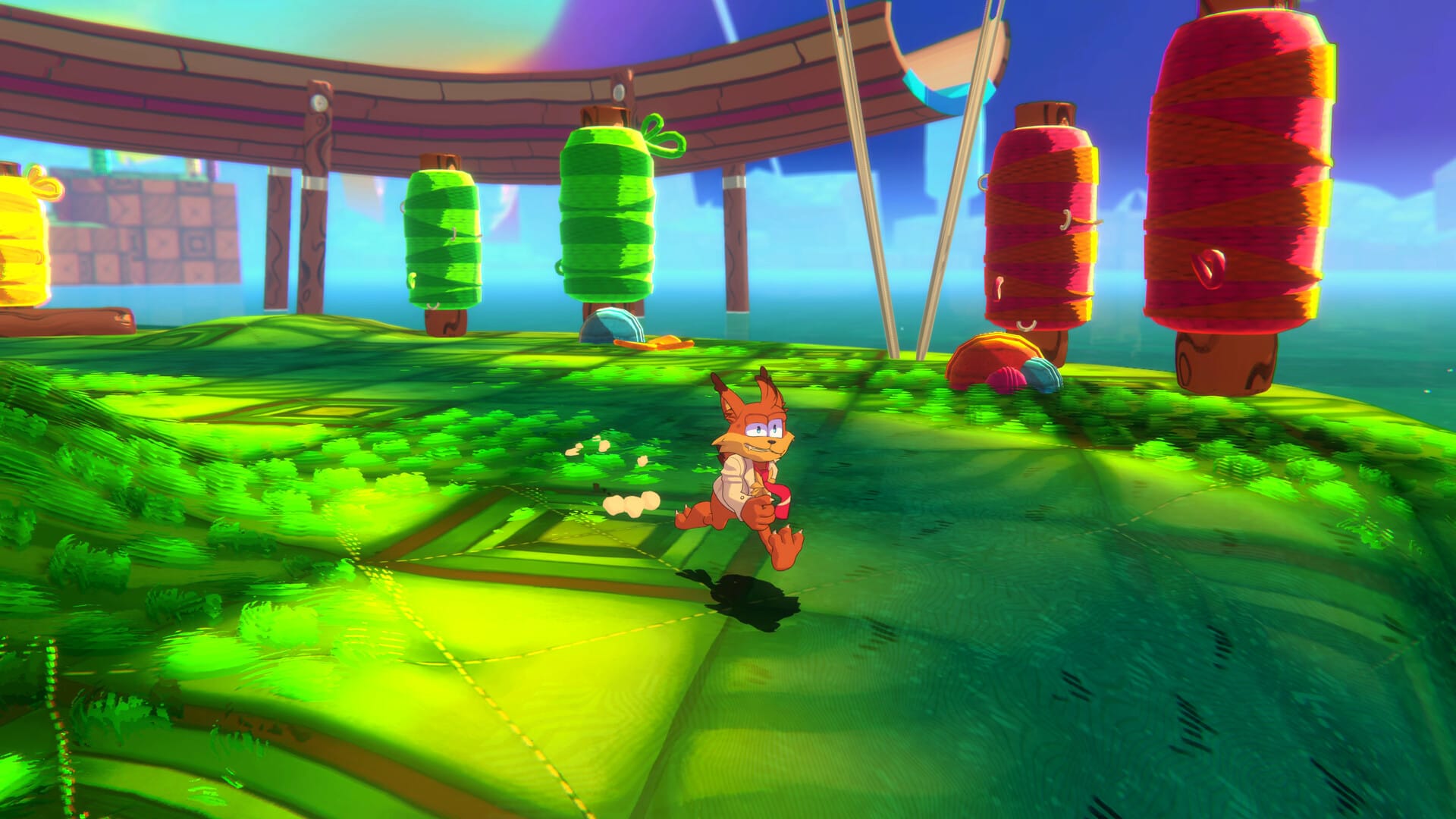
In Bubsy 4D, this means players can accomplish most tasks by mixing and matching a handful of moves—standard platform stuff. But it’s rare a platformer has a menu with explanations of everything you can do, like a fighting game. You don’t need all of them. Some of them are more cool than useful, at least in the hands of a novice. But the options are there, if you want them.
It’s also an approach influenced, interestingly, by games like Devil May Cry.
Think about it. You can happily mash buttons to survive through an action game like Devil May Cry, but the multiple weapons, combos, and movesets work in rhythm with the series’ famous judgey “style” system pushing the player towards creativity. An expressive platformer, at least by way of Fabraz, wants to provide the player with the expected means of jumping, climbing, and exploring in myriad ways, but also asking the player to not just jump well—but jump beautifully.
art19:886cc414-e457-4a92-aea0-cf66dff23354
Unlike Devil May Cry, though, Bubsy 4D does not judge. Nor does it even require aesthetically pleasing jumping. It’s an option. Most players could get by just fine by only using a few moves.
Moves—movesets, movement—define Fabraz games.
It was a core part of the initial pitch for what would become Bubsy 4D, a pitch that came about because Atari proactively reached out to the developer. (Bloomberg recently published an interesting interview with Atari’s current leader about the company’s approach.) The game that’s releasing this week is remarkably similar to what Fabraz pitched at the start: traveling through space, visiting three planets, using new moves like the “hairball,” a redesign for Bubsy himself.
But what is a Bubsy game, anyway?
Busby 3D gets all the (negative) attention, but it betrays an otherwise perfectly fine series of early 90s cat-centric platforming games for the SNES and Genesis. Bubsy was a garden variety “mascot platformer,” the kind of game you brought home from the video store because the game you wanted was rented out. Would you be bragging to friends on the playground that you played Bubsy the following week? No. Did you have a good time? Probably. Good enough, anyway.
“I actually had the first two growing up on the Sega Genesis, as just another set of those bucket-o platformers alongside your mainstays like Sonic or Mario,” said Miller. “And I had fond memories of it. I remember it wasn't my favorite game, but I remember enjoying the personality. [I had a] vague glossy positive memory of it.”
Miller, interestingly, had zero idea Bubsy 3D was so reviled.
“Ben has a healthy relationship with social media,” said Rastorfer, “so he was not exposed to what ended up happening to Bubsy.”
When Atari picked up the’ pitch, the team did their homework. They played every Busby game, researched the animated pilot that didn’t go anywhere, and discovered, according to Rastorfer, “the hatred towards the series is completely overblown.” It was, turns out, just a damn game.
“Michael Berlyn, the original creator, passed away unfortunately, but he really loved that bobcat,” said Rastorfer. “And you could actually feel it once you started looking into it a bit more. And that even includes Bubsy 3D.”
Bubsy 3D and Super Mario 64, the game that would largely define the template for every 3D platformer that came after, were in development at the same time. Some pre-Super Mario 64 games that swam in the early 3D platforming pool, like Jumping Flash, had some interesting ideas. Others simply walked into an incredibly hard problem and didn’t have the right answers.
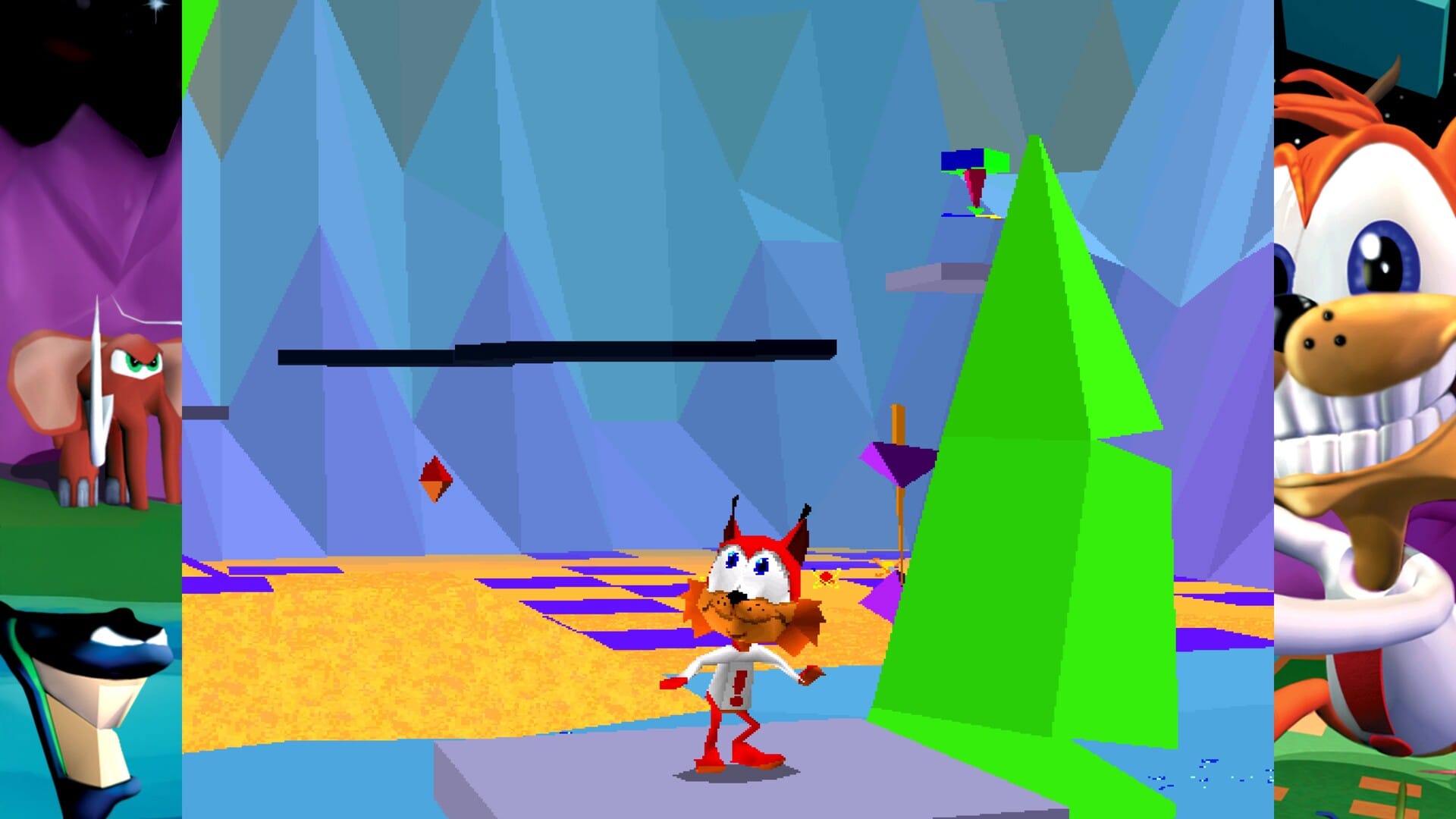
The two games were released within months of one another in the fall of 1996.
Ironically, Bubsy creator Michael Berlin knew he was in trouble before the game was even out. In a fascinating interview with Retrovolve before his passing, Berlin explained what happened:
"It was at the Consumer Electronics Show in Las Vegas. My then partner and I flew out there to help man Accolade’s booth and demo Bubsy 3D. It looked pretty good. I mean, it was in beta. It wasn’t a final, shippable product. But it was pretty good. And I wandered over to the Nintendo area. I wouldn’t call it a booth; it was more like a small office building.
I saw Mario, and I said, “That’s it. Back to the drawing board.” I went back and told my partner to go look at Mario and come back and talk to me about it, and he did. And I said, “We can’t ship this. We just can’t.” He said, “Accolade paid us a lot of money to develop it; what are we going to do?” I said, “We’re going to go back and we’re going to do the best that we can to make it as good a product as we can with the limits that we have. And that’s what we did, but it was definitely a rude awakening when I saw Mario 64.
Mr. Miyamoto… was an employee of Nintendo, so he had all of Nintendo behind him. We were independent developers who were trying to make ends meet and ship a reasonable product. So the differences show, much to my chagrin.”
In context, Bubsy 3D was an ambitious failure that tainted public opinion of everything Bubsy. It’s possible to push that needle too far; no one’s arguing Bubsy is some platforming legend.
Bubsy 4D, however, is a Good Game. You can feel the influence of Demon Tides, Fabraz’s ambitious take on the expressive platformer within an open world, that was developed simultaneously with Bubsy 4D. Demon Tides was slowly built over four years, while Bubsy 4D was made in less than two. Part of that is down to a difference in scope, part of that is Bubsy 4D benefiting from a design framework.
Demon Tides walked so, uh, Bubsy 4D could…furball?
In both instances, they’re games that feel like you’re in conversation with its creators, pushing on the possibilities and, at times, wondering if what you’re doing is what you’re supposed to.
“That's the hidden ingredient, actually,” said Rastorfer. “Because even with us, we try to think about as many possibilities as possible. There are moments where we watch a streamer say, ‘Oh, you know, I bet the devs didn't think of that one, I just like cheesed that part of the level.’ Actually, we knew. And we love that you get that feeling."