
The fat cats in citybuilder Whiskerwood—and they are literally fat cats: fat, royal, colonial felines—sail a ship to my island every few days to collect taxes, and my mice pile the fruits of their hard labour in the hull until our overlords are satisfied.
These cats, called Claws, are greedy but only for certain resources. Logs and cotton are cushty but they won't accept planks cut at my sawmill or copper bars that my apprentice mouse Passer smelted at my ore furnace. This distinction between raw and processed resources seems incidental but it's central to the story Whiskerwood is trying to tell about colonisation and revolution, and how it's trying to tell it.
"The Claws don't want you making manufactured goods," says Daniel Dressler, founder of the Japan-based developer Minakata Dynamics. "They've got plenty of Whiskers [mice] back home who are happy to work in the royal factories… and so if you as this resource colony start manufacturing in your own factories, that's actually theft. You're stealing that value-add that should be going to the royal factories, that should be generating revenue to sustain society."
Whiskerwood is a city-builder that's long on theme but short (at the moment) on storytelling, which can make its engagement with concepts around power, colonialism, monarchy and rebellion feel simultaneously clever and fraught. Dressler explains that he wants to explore mercantilist colonialism in a way he thinks few other games do: both as an "exploitative scheme" and a "willing oppression". Rather than providing a potted-history retelling of colonial rebellion and independence movements, he wants players to arrive at the motivations of colonial elites through their own feelings and experiences—such as the moment you realize why the Claws won't take your metal bars for the sake of subsidizing their imperial core.
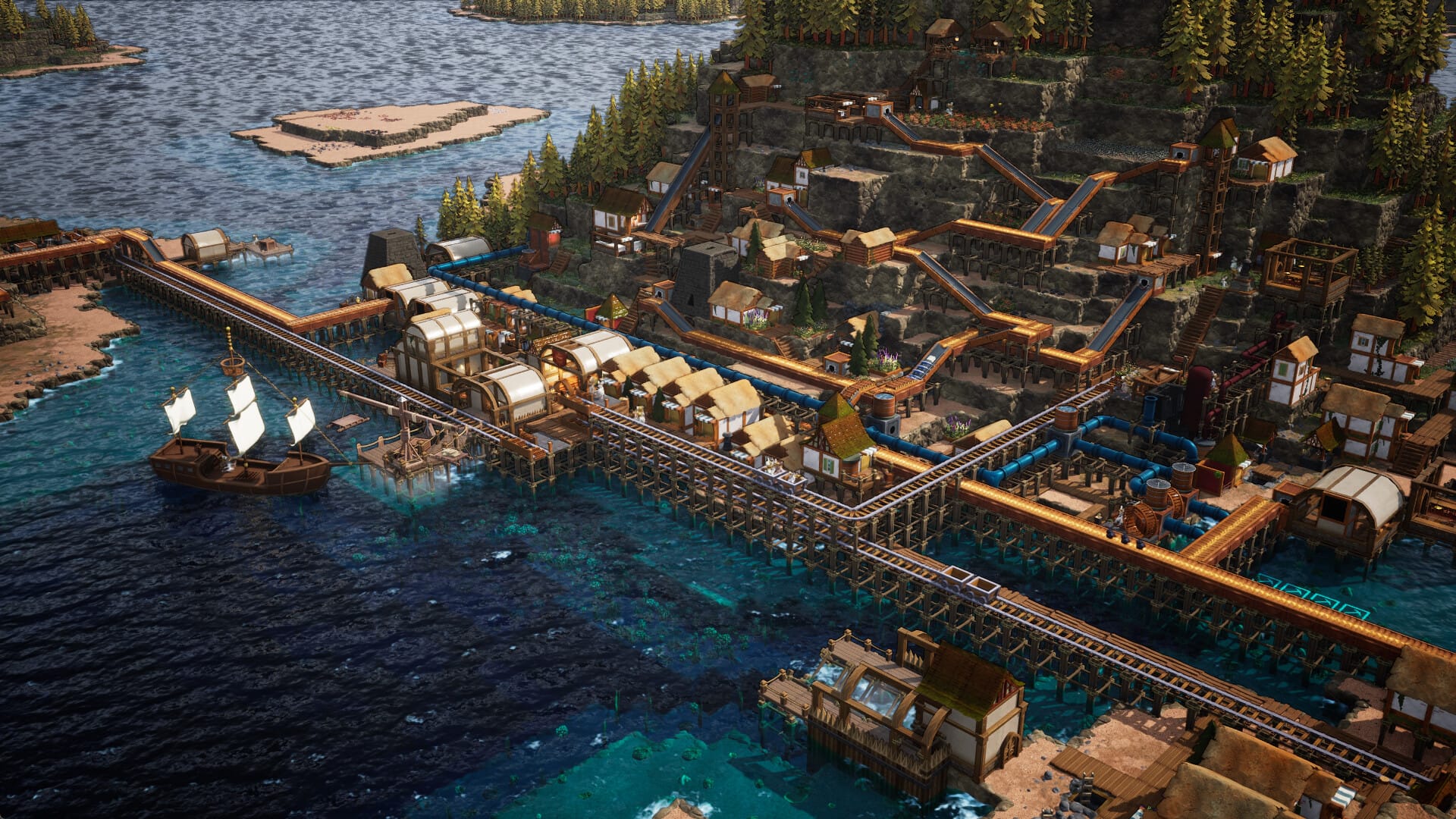
Aftermath's Luke Plunkett recently called it one of the best city-builders of all time, and it arguably is, but its mechanical intricacy is deceiving. Whiskerwood's Early Access build contains only Act One of three intended acts. It has laid its economic foundations but its complex narrative is barely simmering. Even in this early state, it's on track to be a very special game, and one that takes an approach that is both serious and whimsical to its subject. Yet its interest in historical allegory only stretches so far. Indigenous people and slavery don't exist in Whiskerwood's colonial city; what oppression it portrays is directed at your population of imported mouse-laborers, artisans, and managers. Its invocation of history invites questions about the particular limits Dressler places on Whiskerwood's subject matter, even as its quality is undeniable.
Signing up is free!
By signing up—again, it costs nothing!—you can read the rest of "Of Mice and Mercantilism: Whiskerwood’s Ambitious City-Building," and receive free newsletters and emailed articles from Remap!
Sign up now Already have an account? Sign in