
Douglas Goodall knew the world. When he joined Bethesda Game Studios in 2001 as a writer and designer, he was working in IT and had worked as a programmer on unreleased games. He was also a fan of Bethesda’s Elder Scrolls role-playing game series who had spent countless hours in its fantasy world of Tamriel, learning the histories and mysteries that lurked in the background of the games' quests. When he was hired to work on the next game, Morrowind, he thought that knowledge would be worth something. After all, he knew the lore better even than the people working at Bethesda.
He was unprepared to hear that his expertise was unnecessary. That having extensive command of the lore of The Elder Scrolls didn’t mean he understood how the world was built.
The designers on his project would produce multiple conflicting pieces of backstory and exposition about Tamriel throughout the game, without any evident care for which account was true. There was no truth: Existing lore could be contradicted if the changes were “cool” enough. What kind of way was that to build a world? Goodall felt like players who cared about the lore were wasting their time, and did not know it. “It did upset me, probably more than it should have,” he said in 2025.
During a dispute with his boss that a colleague remembered as about whether the world of The Elder Scrolls could accommodate Amazon women, Goodall quit the company. “I loved the original Elder Scrolls too much to stop arguing in their favor,” he said later. He had approached The Elder Scrolls full of zeal for the world and conviction in the stories that took place there. He had come into the world factory armed with faith, only to find that it was the heretics who were the worldbuilders.
The language of lore is religious. The history of the world is written in bibles; if recognized, it becomes canon, a shorthand for truth. A story is true, or not, to its lore. When the HBO television adaptation of George R.R. Martin’s A Song of Ice and Fire novels outpaced the source material, the studio assured viewers it was working off Martin’s outlines for the books he was yet to write. The show, in other words, was still preaching from the gospels.
Worldbuilding, the development of lore, is a professionalized skill, or obsession, of fantasy writers. J.R.R. Tolkien spent more than a decade detailing the history, customs and language of Middle-Earth before writing The Hobbit. In 1962, an interviewer for the BBC asked him why. Tolkien shrugged, then said, “I don’t think I could reveal why one wishes [to] create a thing like that.”
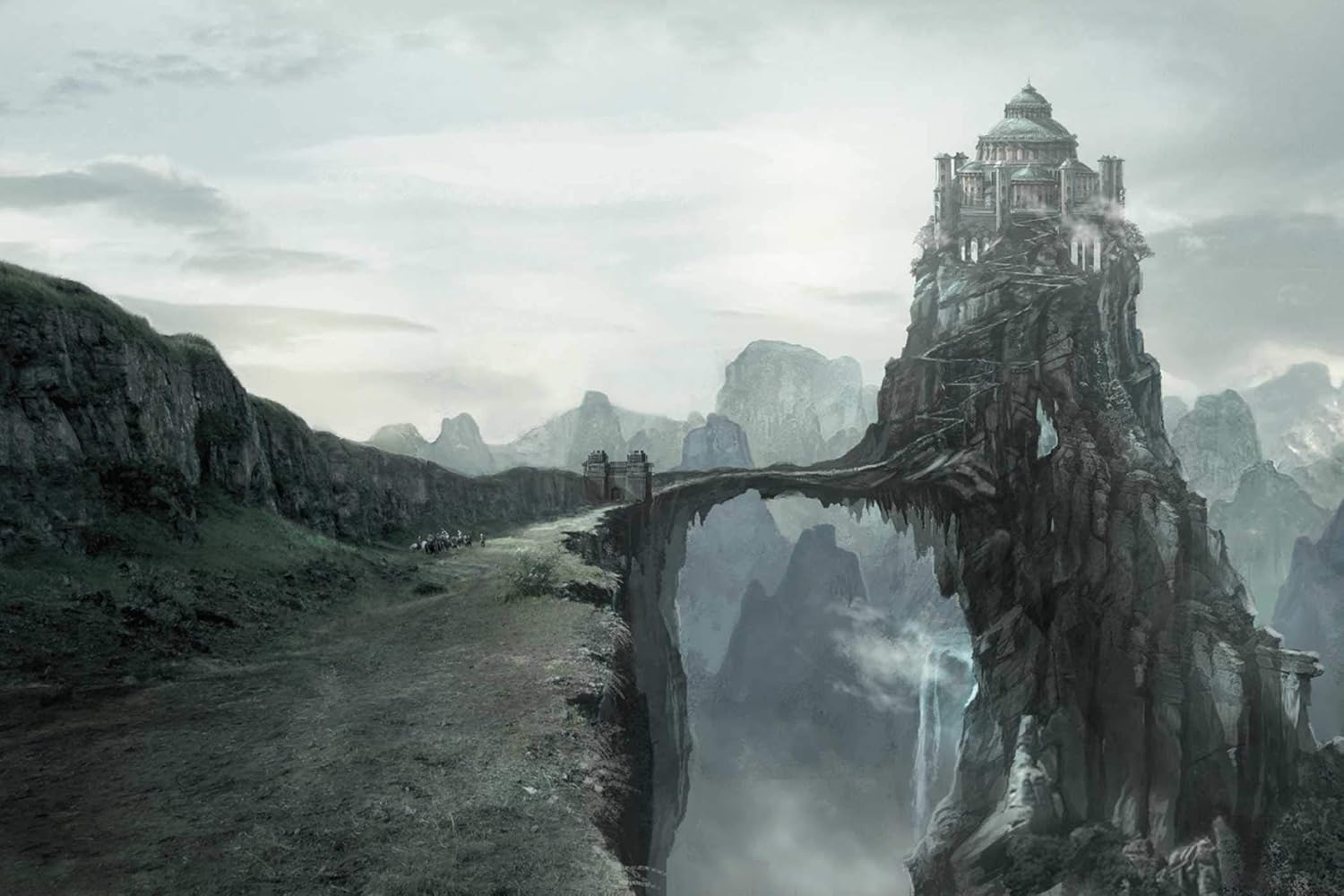
Martin developed the "mythos" of the video game Elden Ring on commission; not a single written word of his is in the game. The author R.A. Salvatore wrote “10,000 years” of fictional history for a game never completed. The act of worldbuilding can be satisfying in itself: “That is my favourite high—better than all the drugs I have so cheerfully poisoned myself with,” said Greg Stafford, creator of the role-playing setting Glorantha.
Gary Gygax, co-creator of the role-playing system Dungeons & Dragons, did not much like Lord of the Rings. “It was so dull. I mean, there was no action in it,” he said. “I’d like to throttle Frodo.” Gygax’s violent impulse was a profitable one, leading indirectly to the principles of D&D: what if, instead of having to tolerate an annoying character, the player could throttle them? In so doing, the player would leave a story and enter a game, one all their own. Gygax “had little time for people who played too by-the-book… [who would] ask the publisher of the game what to do.” Said Gygax, “Whatever they were told, they did. And I said, that’s silly—just make it up.”
In 1975, Gygax supplied a formula for worldbuilding: “decide upon… the countryside of the immediate area… the layout and composition of the nearest large town; and eventually the entire world—and possibly other worlds, times, dimensions…” Even if none of those times or dimensions were visible outside the grounds of the player’s adventure, the sense of a world with history deepened and reinforced the fantasy, just as the image of a sky does in a video game. The sky is ornamental, but without it, the world would feel false.
For the video game Disco Elysium, such details were developed for over a decade before production on the game even began; in the source material are answers to all the game’s mysteries. “If I was to say there isn’t an answer, that would be to say that the world is meaningless,” said one Disco writer.
The world of The Elder Scrolls is, by this definition, meaningless. This has been no impediment to its success. The Elder Scrolls series comprises five entries—Arena, Daggerfall, Morrowind, Oblivion, Skyrim; each more popular than the last—and one long-running online game. In video games, it is probably the most successful RPG franchise to come out of the West. It is easy enough to understand why. The games are vast fantasy sandboxes: approachable, adaptable to different tactics and plans, meme-friendly, and blend violent action with awesome exploration. The series’ stories and plots are simple; its lore is confounding and metaphysical: as if the pedestrians in Grand Theft Auto spoke dialogue written by Alesteir Crowley. If a player invests tens of hours in an Elder Scrolls, they will master its game systems; if they invest the equivalent time unpacking its lore, the less they will understand.
The Imperial Library is an Elder Scrolls fansite cataloguing every piece of world information from inside the games, and a lot from outside them. A typical addition to the Library is a “comparison between the psychopomp Moon Beast of Lorkhaj, and the darker version summoned [by] a disciple of Namiira.” Lorkhaj is one race’s interpretation of a god known by others as Lorkhan; Namiira is the “mistress of decay” who corrupted Lorkhan, but only in some cultures. An administrator of the Library, who uses the screenname Lady Nerevar, told me: “There is no one answer to discover and be done with, but rather dozens of possible interpretations to discuss. There is a framework for its cultures and history, but it’s up to you to come up with the specifics.
“It’s not important that specific minutia matches up as long as the overall vibes remain consistent,” she said. “I think lore is a series of themes.”
The Elder Scrolls lore subreddit has 174,000 members, only 9,000 fewer than the one for Greek mythology. This idea, commonly accepted, that lore is a series of themes and not facts, can be intimidating. “That’s a terrible thought,” one user protested. “It pretty much means that anybody can say anything, that every theories and ideas are true. If that’s the case, then this whole subreddit is pointless, asking questions is pointless, any investigating work done to try to understand the lore is pointless, because everything can only be true and nobody can be wrong. That’s scary…” Three years later, that same user was advancing a theory that “Yokudan soul-singers” manifest spirit swords by splitting the atom, debating whether a ghost from an Oblivion expansion pack was "a time traveling gay cyborg", and just asking questions about the Orsinium massacre.
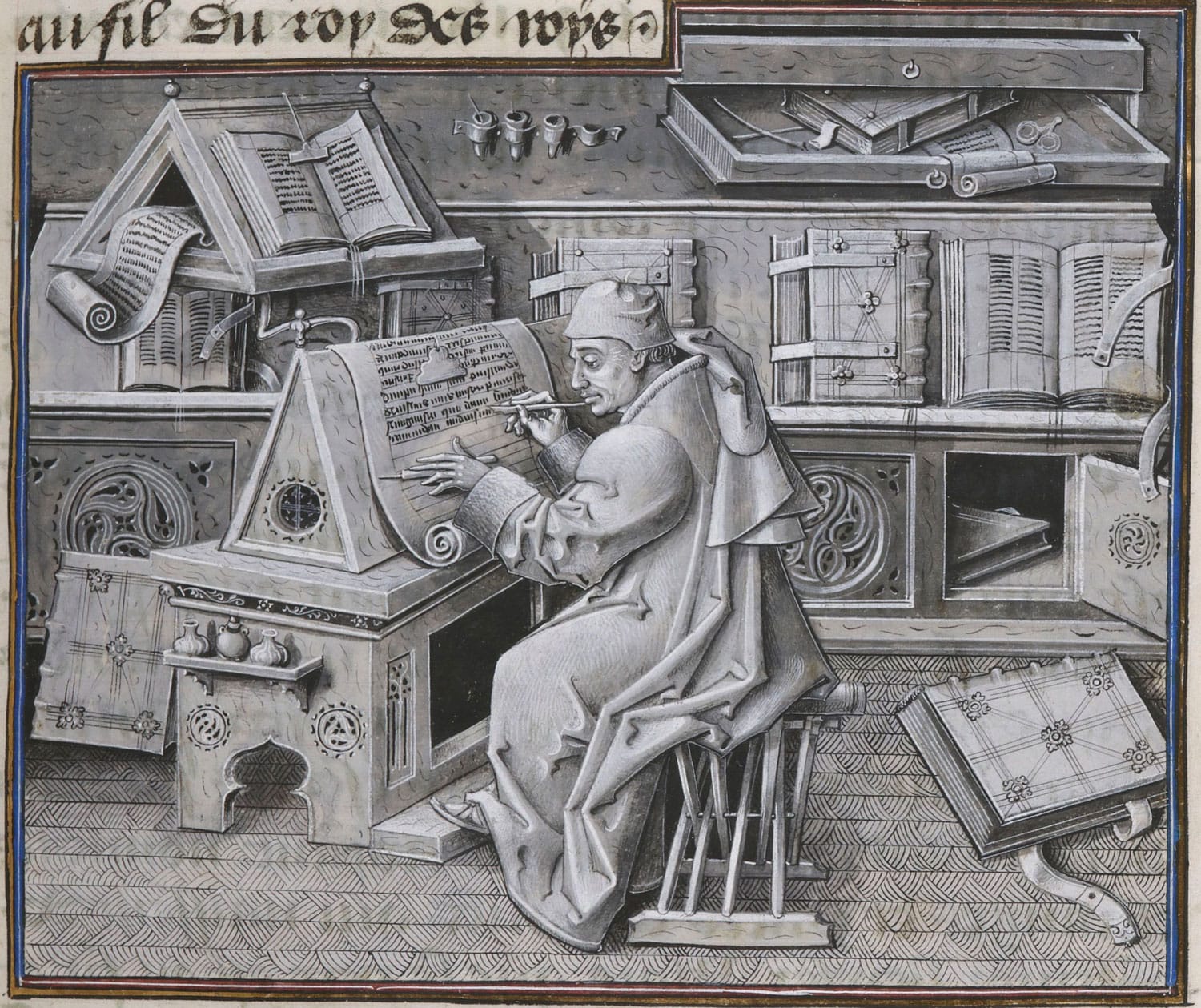
Charles Brandt, one of the Imperial librarians, compared being a lore fan to role-playing ancient archaeology. An obvious difference is that the mysteries of the ancient world concern facts irretrievably lost; the mysteries of The Elder Scrolls could be answered at any time with facts, but will not be. What happened at the Battle of Red Mountain, from the series’ foundational lore, when the Dwemer race mysteriously vanished from the earth? If it were Tolkien’s world, he would know. Bethesda? “A lot of the lore isn’t meant to have a definitive answer,” Skyrim co-lead designer Kurt Kuhlmann told me. “We are never going to give you the definitive, official timeline.”
The Elder Scrolls is an oddity in both its medium and its genre: A massively popular fantasy world known to anyone who knows anything about games, but with no canonical history, timeline or comprehensive, causative explanations for the things people stumble across in their journeys. Last year, I spoke to a number of the writers and designers behind the lore of The Elder Scrolls to understand why this most mainstream of fantasy video game franchises is arcane and unanswerable at its margins.
The lore of The Elder Scrolls has been able to grow, and encompass conflicting cultural interpretations of moon beasts, because there never was a single foundational text establishing the lines in which future contributors could color. Nor has the series had the equivalent of a Tolkien figure to weigh in on the original intention.
Vijay Lakshman, lead designer of the first Elder Scrolls game, 1994’s Arena, came up with the phrase “Elder Scrolls” without knowing what it meant. The Arena project grew out of a love for D&D, pen-and-paper RPGs and medieval fantasy movies that Lakshman shared with programmer Julian Lefay.
Lakshman said that he developed “five novels’ worth” of detail about the world, but as a business plan: the idea was the base game would comprise one corner of Tamriel—the continent on which The Elder Scrolls takes place—and the rest of the world would be sold piecemeal, as game modules. “I had to write out all the [places] to know what’s going on. I did the Khajit, the cat people. I remember doing the lizard folk. The Bretonians, which are like Britons. The Dark Elves.” Ted Peterson, a designer and writer, compared this collaborative worldbuilding process to a birthday card passed around an office: everyone took a turn to name a town.
In Lakshman’s telling, Arena became at 13 months of development the most expensive game Bethesda had ever produced; founder Christopher Weaver gave the team one month to wrap it up. This forced Lakshman and Lefay to abandon their expansive plans and refocus the game as a standalone tour of Tamriel. “If I hadn’t had all that backstory, it would have been impossible,” Lakshmann said. “I’m not saying Arena had a great backstory. It didn’t. It was the best we could do at the time.”
Arena and its sequel, Daggerfall, depicted a familiar medieval fantasy world of magic and monsters, reminiscent of D&D. This was also a business decision. “It was very D&D-ish. Daggerfall is vanilla,” said Lefay in 2017. “There’s a reason why vanilla is so damn popular. People like vanilla. They understand it. They get it. They identify with it…. Originality is nothing. It doesn’t matter. You can be as original as you want, and it’d still be shit.”
With Daggerfall, Lefay and Peterson took the opportunity to flesh out their fictional setting. (Lakshman left Bethesda after Arena.) The world of Daggerfall was packed with books to read: histories of recent wars and criminal underworlds, guides to gods and etiquette, fables of kings and doomed lovers—all attributed to fictional authors. All information about the world was filtered to the player through the voices of the characters in that world. The designer did not tell the player how, objectively, the world was organized. They didn’t even tell themselves. “A lot of things were in my head,” said Peterson, “which is ridiculous for a game with that much lore.”
Bruce Nesmith, who had then spent a decade as a designer at the D&D publisher TSR, joined Bethesda for Daggerfall. He remembered how much ambition Lefay and Peterson had for building out the history of their world. Nesmith, who worked at Bethesda from 1995 to 1998 and 2004 to 2021, said that it would be hard for anyone to care about the lore more than those original writers, Lefay and Peterson.
Kurt Kuhlmann joined Bethesda at the tail end of Daggerfall’s development as a junior designer. When I put this comment of Nesmith’s to him, he pulled a puzzled face.
“I don’t think I’ve ever really enjoyed anything that I’ve really understood,” Ken Rolston told me last year.
Rolston was the lead designer on Morrowind, the arch-heretic whose cavalier approach to narrative and worldbuilding so frustrated Douglas Goodall. Rolston boasted a comparative wealth of experience next to many of his Bethesda colleagues, having designed tabletop role-playing games–including D&D and RuneQuest, set in Greg Stafford’s Glorantha–since 1982. He was no stranger to working with expansive, lavishly imagined game worlds, and delighted in adding to them.
Rolston's new colleagues, like Kurt Kuhlmann and Michael Kirkbride, had grown up with Rolston's worlds. “They all had the same currencies of excellence, so therefore I could sit as a reigning god among them,” said Rolston. He could, because he had had to learn how, create a role-playing game in six months, worldbuilding included. “I’m always bluffing. I never know what I’m talking about,” he added. “I’m sure that God, if He were to exist, would probably be making it up as He went along.”
Michael Kirkbride came from a place bounded by faith on the one side and hard scientific reason on the other. He attended the University of Huntsville in Alabama on an art scholarship—he wanted to be a painter. To the neglect of his art studies, he fell in love with a creative writing class. Comparative religion caught his attention as well. Growing up in the Deep South, he had the U.S. Space and Rocket Center to one side and the preachers of the Bible Belt on the other—“rocket scientists and Jesus freaks”—and it intrigued him, the dissonance of that. He was not, however, being paid to write. When the scholarship money dried up, in 1993, Kirkbride dropped out. It did not imperil his prospects: three years later, he was hired as an artist at Bethesda.
There, he bonded with Kuhlmann, the junior designer who had just graduated with a masters’ degree in history, and had as a hobby made a board game about the Peloponnesian War.
Kirkbride, Kuhlmann and Rolston formed a productive creative triad. Kirkbride was interested in the fantastical and cosmic, Kuhlmann in the material analysis, and Rolston in what it actually meant to anybody. “It doesn’t matter that we have all these mythic heroes and all this magic and this unlikelihood. How does the pet regard it when it’s getting scraps under the table?” Kirkbride explained in 2019. “Kurt would take my stuff and interrogate the logistics of it, Ken would turn around and make it into a homily that they sing at the temple.”
Ted Peterson had moved to Los Angeles. Julian Lefay was leading an Elder Scrolls spin-off, assuming that he would also lead the Daggerfall sequel. Kirkbride, Kuhlmann and Rolston were on a different Elder Scrolls spin-off; the first extension of the Elder Scrolls world without either Peterson or Lefay’s participation.
Beau DeMayo, a writer who worked on Netflix’s adaptation of The Witcher, once criticized that show’s writers for insufficient reverence towards the original Polish novels. “It’s a recipe for disaster,” he said. “Fandom as a litmus test checks egos.” Kirkbride and Kuhlmann were not fans of The Elder Scrolls and their egos were not checked. Kuhlmann liked some stuff. He liked that all the lore in the world was presented from subjective perspectives. He liked the stranger bits, like the end of Daggerfall being built around a giant robot. (“What’s that doing in a fantasy game?”) But he thought it was generally derivative.
Kirkbride thought it all was boring. “By boring, I mean generic. There’s nothing inherently wrong… I’m being diplomatic. That shit was boring,” he said. “It was a bunch of fantasy salad with not a lot of background beyond a map and some names. Any kind of worldbuilding, I didn’t see.”
What did excite Kirkbride was inconsistencies in the fiction. He would go to the office late at night and play the games. If something didn’t make sense, that was interesting. “That meant I could explain it six different ways. What do the cat people think about that? It’s bullshit. Okay, now what do the Nords think about it?” He found writing up those explanations to be a good creative exercise, but the real fun was in emailing the work to his colleagues or leaving printed copies on their desks, without explanation, for them to decode in the morning.
Signing up is free!
By signing up—again, it costs nothing!—you can read the rest of "Who Cares About the Lore?," and receive free newsletters and emailed articles from Remap!
Sign up now Already have an account? Sign in