
I’ve been feasting on friendslop lately.
When I miss home, the thing that brings me closest to it isn't a phone call or a text thread. It's not a group meeting around webcams and laptops. It's "friendslop".
Two years ago, I migrated to Australia from Singapore. A sense of loss haunted my first few months here, living so far from a familiar community. I had promised to stay in touch with everyone and arranged regular video chats, but the experience of those calls was dissonant. I enjoyed the company, but facing a camera for hours was draining, as was the frustration of poor internet connections, and the awkwardness of conversations simply drying up.
The calls eventually tapered off. They went from fortnightly to monthly, then to once every few weeks. I was on the emigre's too-common trajectory of increasing distance and alienation from home, the process almost accelerated by technology that I'd expected to bridge that gap.
The trajectory changed, however, when a friend made an off-the-cuff comment about how she couldn’t finish Firewatch, a game that involves finding your way around a forest, because she kept getting hopelessly lost. She sheepishly pointed out that she has poor spatial awareness and zero map-reading skills. It was then that I suggested we play Big Walk together. “You can’t get lost in Big Walk,” I told her.
My reluctance around online calls isn’t new, but it hardened during the lockdown-era of COVID back in 2020. Being on these calls puts me in a state of low-grade anxiety, constantly choosing between the tedium of having to produce a constant stream of conversation or enduring cold, stark silence that is somehow even more pronounced on platforms like Zoom and Discord.
But if video calls are like formal family dinners, then friendslop is akin to a casual gathering at the park or the streets. In spite of the dismissive name for the genre garnered by their quick and easy popularity, they have become a new kind of social space, distinct from both other multiplayer video games and from other online social tools and networks.
There’s always a tinge of competitiveness when it comes to playing games together. They punish confusion, uncertainty, and inexperience. Friendslop doesn't. These games have different contours to their experiences, offering a different sort of virtual space where players can game and socialize in them regardless of skill.
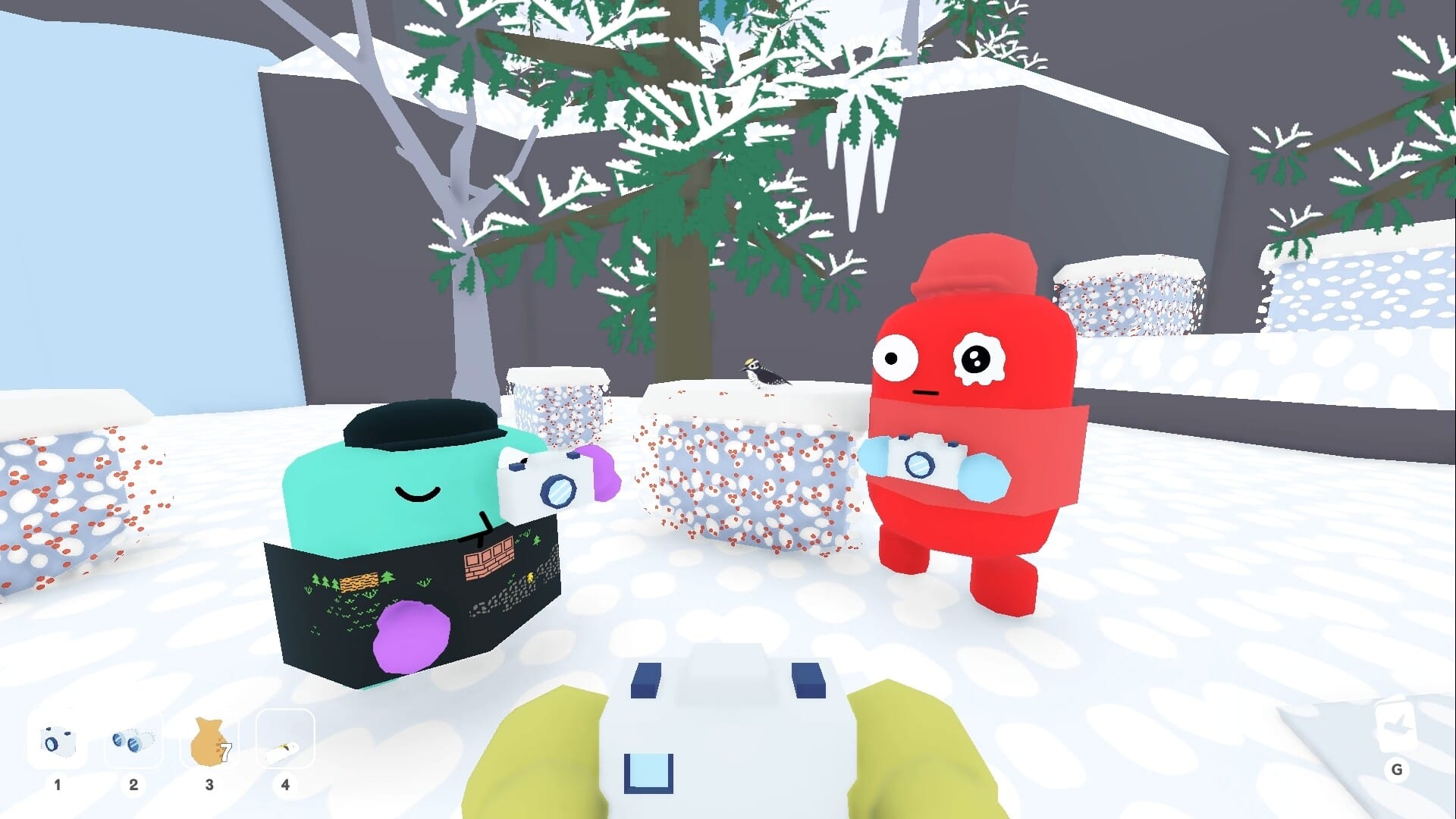
Take their controls, like that of Peak, Flock Around and Big Walk, which are easy to pick up as long as you are familiar with the concept of walking in virtual spaces. This may seem intuitive, but there is a learning curve to walking in games, as some of my non-gaming friends will attest. There may be some simple puzzles to complete, but these generally aren’t based on advanced maneuvers like side-stepping or dodging. Instead, activities are largely focused on nurturing collaboration and teamwork, like climbing mountains together in Peak, or birdwatching in Flock Around. They incorporate proximity chats, which encourages players to stay together as they explore their vicinity but also gives each player an easy way to get some space and take a break simply by wandering a bit further afield, like someone going around the corner to the store for a few minutes or wandering outside for fresh air. Then there’s the genre’s distinctly indie veneer, with these games being lower-fidelity than the hyper-realistic graphics of blockbuster games. These keep such friendslop games approachable. After all, you don’t need a high-end gaming device to play a friendslop game; my partner was using an old laptop to play Peak during our weekend sessions.
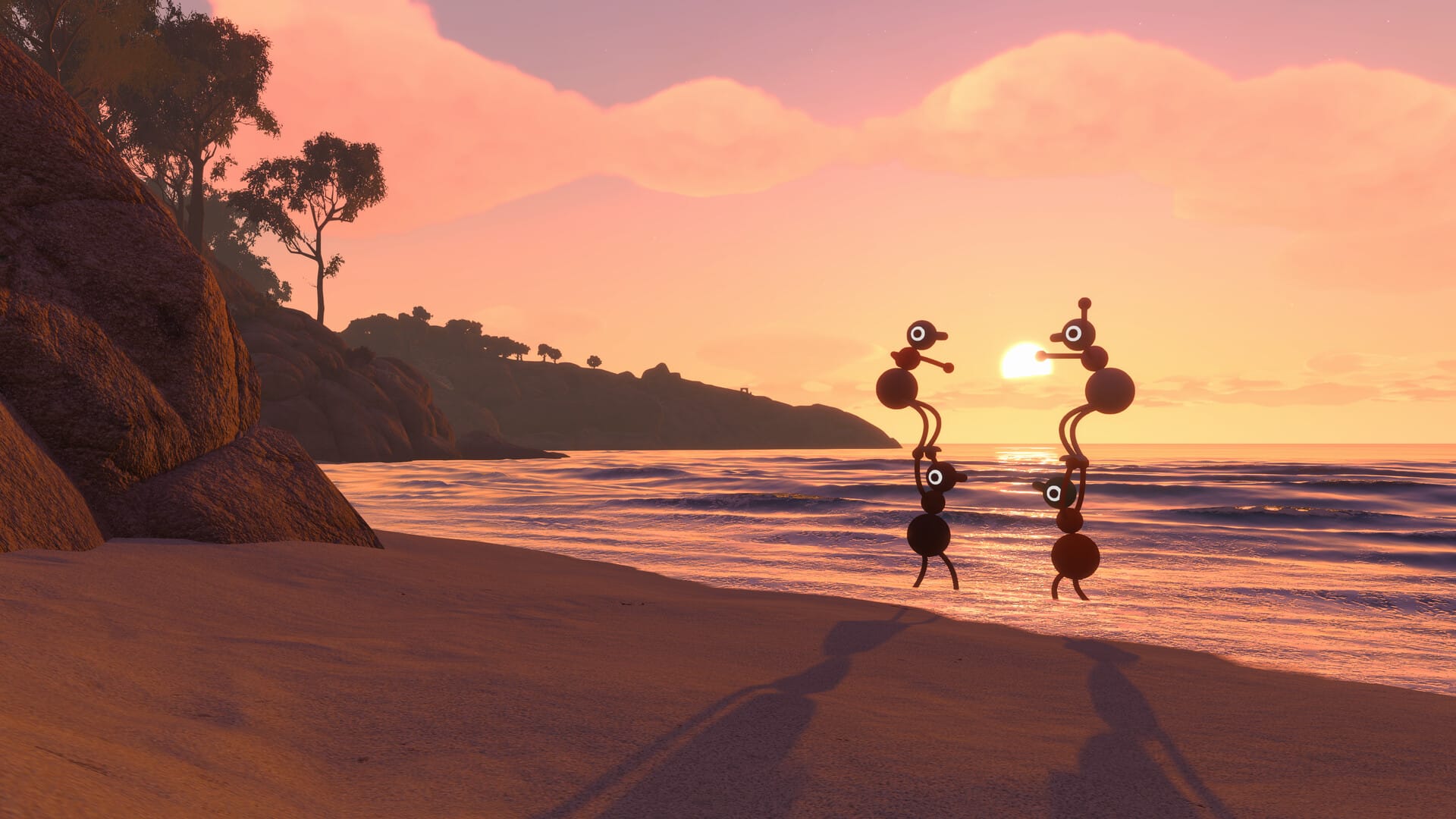
Big Walk, in particular, is one game I’ve been introducing to friends who wanted to get into the hobby, but are too intimidated by the complexity of single player titles. But there’s another reason for the recommendation: it’s also an opportunity to reconnect. Amidst mindless chit-chat about daily life, we get to solve a litany of puzzles in its vast bushlands, and also discover places of reverie where ambient music is broadcasted and we can watch the sun rise One of my favourite puzzles in the game isn’t even a puzzle at all; to collect a trinket that we somehow collectively refer to as a “squeegee” (it just looks very squishy), we just need to spend five minutes together in a locked room till the timer runs out. In here we are simply allowed to be. Silence is no longer awkward, but a warm moment that lets us contemplate and inhabit the coziness of its space.
Mechanically, friendslop doesn’t quite break the mould. But while co-op and multiplayer games have existed before the genre, there are divergences. Shooters like Team Fortress and Left 4 Dead may involve collaboration among teams of players, but they have a competitive element to them, while requiring some amount of dexterity and reflexes to achieve objectives—not so great for friends who already struggle to look down a scope of a rifle. More social-oriented games like Second Life, Garry’s Mod and Roblox invite players to socialize, but they lack the sort of objectives that most traditional games have, an impetus to socialize and opportunities for emergent experiences (at the same time, it’ll probably be amiss to paint all friendslop with the same brush. Games like Lethal Company and REPO with extraction elements can be a tough sell to non-gamers, with Lethal Company living up to its name for being particularly, well, lethal).
That’s why friendslop may very well be an evolution of the very games that skyrocketed into popularity during the lockdown era. Among Us, in particular, is exceedingly easy to master and available across most devices; you can even play it on a phone. And with Animal Crossing: New Horizons and Fortnite, games were gradually being recontextualized as social spaces for the first time. People were spending their birthdays and celebrating milestone occasions in New Horizon. Fortnite surged in popularity, outgrowing its roots as a tower defense and battle royale game with a sandbox mode, called Fortnite Creative, that lets players watch musical performances and participate in other virtual events. For a time, even election campaigns were held in these spaces.
Adjacent to the growing popularity of friendslop are the virtual spaces that sought to replicate the nuances of in-person conversations, both social and professional. The virtual offices of Microsoft Teams, Slack and Zoom, as well as messaging platforms like Facetime and Whatsapp, have swelled in use during the lockdown, but frequent use has led to a trend known as “zoom fatigue”, which arose from too much screen time. Then there’s Facebook’s failed aspirations for a metaverse, a virtual space that would purportedly offer a new, immersive realm for work and play, but was actually just disembodied avatars floating around awkwardly where you get to uh, throw some paper planes around.
No one ever looks forward to hanging in these spaces; they are merely platforms for people to exchange information with one another in the most efficient way. It’s why we can’t wait for our work meetings and conferences to end. They are merely approximations of conversations.
In contrast, friendslop seems cutting edge, despite or maybe because they are made without the boundless resources of tech conglomerates (though with Big Walk this is complicated by developer House House's use of AI tools in development). By melding the gaming and social environments seamlessly, these games are becoming an ascendent form of social space: one that’s friendly enough to non-traditional gamers, yet still engaging enough for seasoned players, all while embodying the ease of leisure activities like hiking or watching a movie with more finesse than other genres or virtual platforms. Thanks to friendslop fuzzing the distinction between gaming and hanging out, I’ve inducted more friends to these weekly sessions than before.
These days I’ve settled into a comfortable routine of fortnightly gaming sessions with friends. We shriek over the absurdity of Peak’s climbing shenanigans (I realize that I’m extremely susceptible to giving up my trek when everyone around me is dead), or marvel over puzzling curios in Big Walk. We catch up on life’s excitements and trepidations in between charting a path through precipitous cliffs and thick, overgrown fields. We make plans to meet up, finally, when I head back home. And in November, we made a trip down to Wilsons Promontory National Park in Melbourne, a place Big Walk is based on. Fortunately, we didn’t get lost in real life.