
After Bungie originally announced the end of Destiny 2 live service support towards the end of May, I really couldn’t bring myself to log on to the game again. Destiny 2 was a big part of my life for several years, and then in 2020 I drifted away from the game—I’d taken on a new job which changed my schedule drastically, and a high-commitment social game didn’t fit into my life any more.
I had come back to the game earlier this year—before Bungie’s announcement—largely because I craved one very specific thing: the Crucible. Destiny 2’s PvP mode has been much maligned over the years, both by players who don’t enjoy PvP play to begin with (and resented having to go into the Crucible for specific events or to get specific rewards) and by PvP purists who did not always enjoy the state of the game’s PvP combat sandbox.
For my part, I always enjoyed it for what it was: the best, last iteration of a long genre that had been a formative part of my gaming life. I grew up with first-person shooters on PC, but I was always more drawn to the chaos of Unreal Tournament or Half-Life 2: Deathmatch than to the self-serious creeping around of Counter-Strike or the bombast of Battlefield. For me there was always something to what I might call the classic deathmatch shooters: games that didn’t aspire to realism but still retained the kinetic, sharp, almost mean-spirited edge that was already there in Quake.
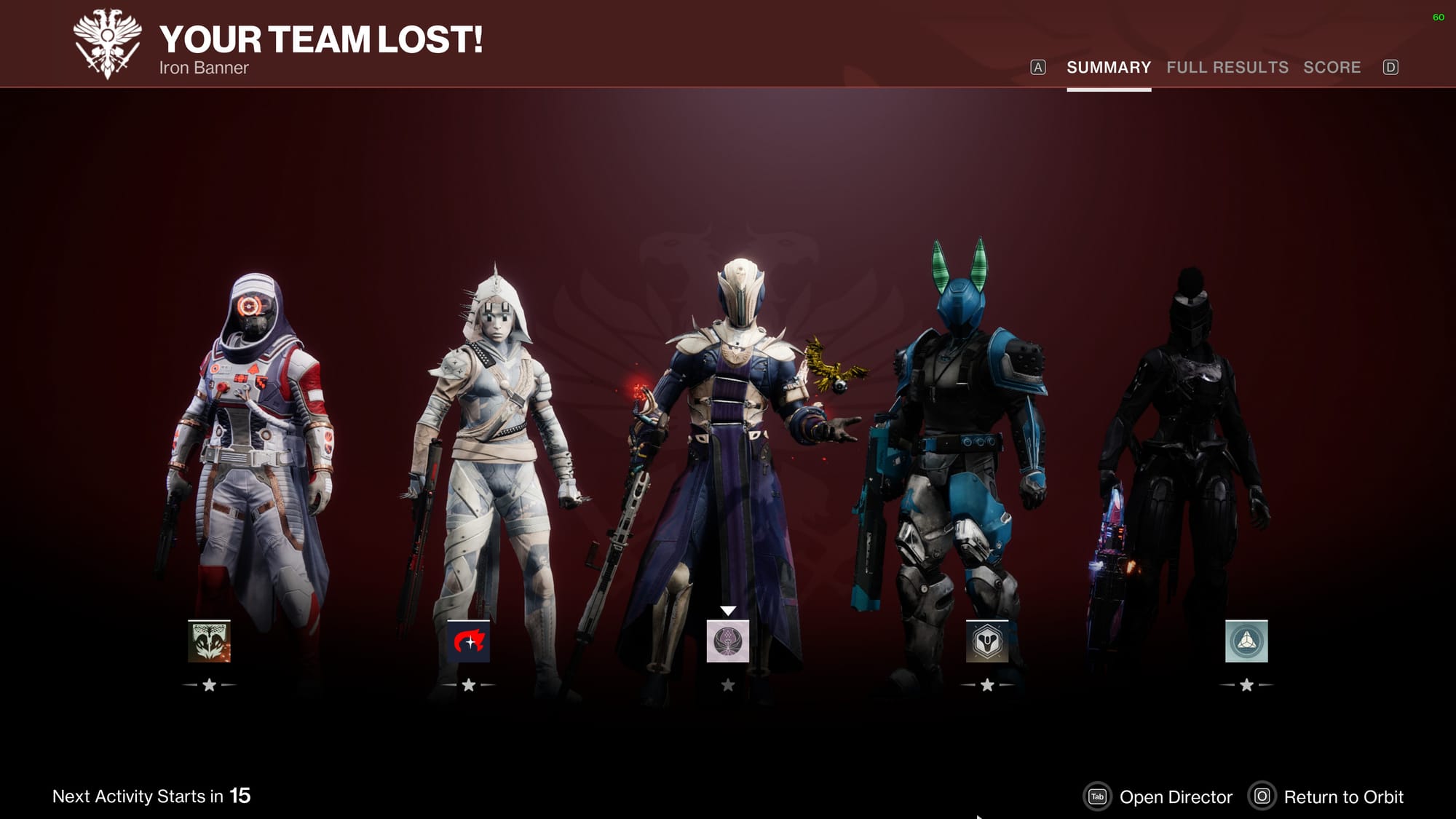
Destiny 2, originally released nearly 10 years ago in September of 2017, came at a strange time for shooters. Overwatch, Blizzard’s hero-shooter hit, had launched eighteen months before and altered the genre forever. Epic’s Fortnite launched its battle royale mode in the same month; it would propel the original mostly-forgotten Fortnite: Save the World into a completely different genre and an entirely new tier of success.
Those games emphasized entirely different things from what had long been the central mechanic of shooters (ie, clicking on heads). Fortnite was a chaotic, kid-friendly reinterpretation of the match structure that made PlayerUnknown's Battlegrounds so successful not only as a game but as a spectator sport. Overwatch transformed the genre by looking at the direction that Valve’s Team Fortress 2 was pushing in—charismatic characters, drastically different play patterns across classes—and running with it, taking that concept all the way to a game that was pathologically marketable, almost entirely meaningless, and never meant for people like me.
Destiny 2 charted a very different path. Its design lineage traces back to Bungie’s own Halo games, the series that originated the console shooter as we know it; those games had some Quake DNA, but with a controller-friendly aiming model that always felt loose and chunky to a lifelong mouse-and-keyboard player. But Destiny 2 had a different brief from these games; it was Bungie’s first truly cross-platform shooter, one built to stand up to the scrutiny of mouse-and-keyboard players while still letting them coexist with controller players in the same lobby.
This was a very hard problem to solve, but in the process Bungie’s designers put together what I still think is one of the finest deathmatch shooters ever made. It didn’t have to be that way; Destiny 2, outside of the Crucible, leans on heroic power fantasy. This is a game that treats the gun in the same way that fantasy stories treat swords. Player characters—Guardians, in the setting’s terminology—are portrayed as an unstoppable force, Warrior-revenants who keep coming back from the dead, whose desperate defense of the Last City is only possible because their powers present an outside-context problem to the enemies of humanity.
So it is a bold choice that in PvP, the game has an extravagantly short time to kill. There are sniper rifles that can take you across the map in one shot. Shotguns do the same at short range, turning mobility into a weapon. The game uses its ammo economy to regulate those things, but even when players are reduced to their unlimited-ammo primary weapons, death is never far behind—the gold standard for a revolver is the ability to “three-tap” another Guardian, and many weapons can access a temporary damage buff that lets them do it in two shots.
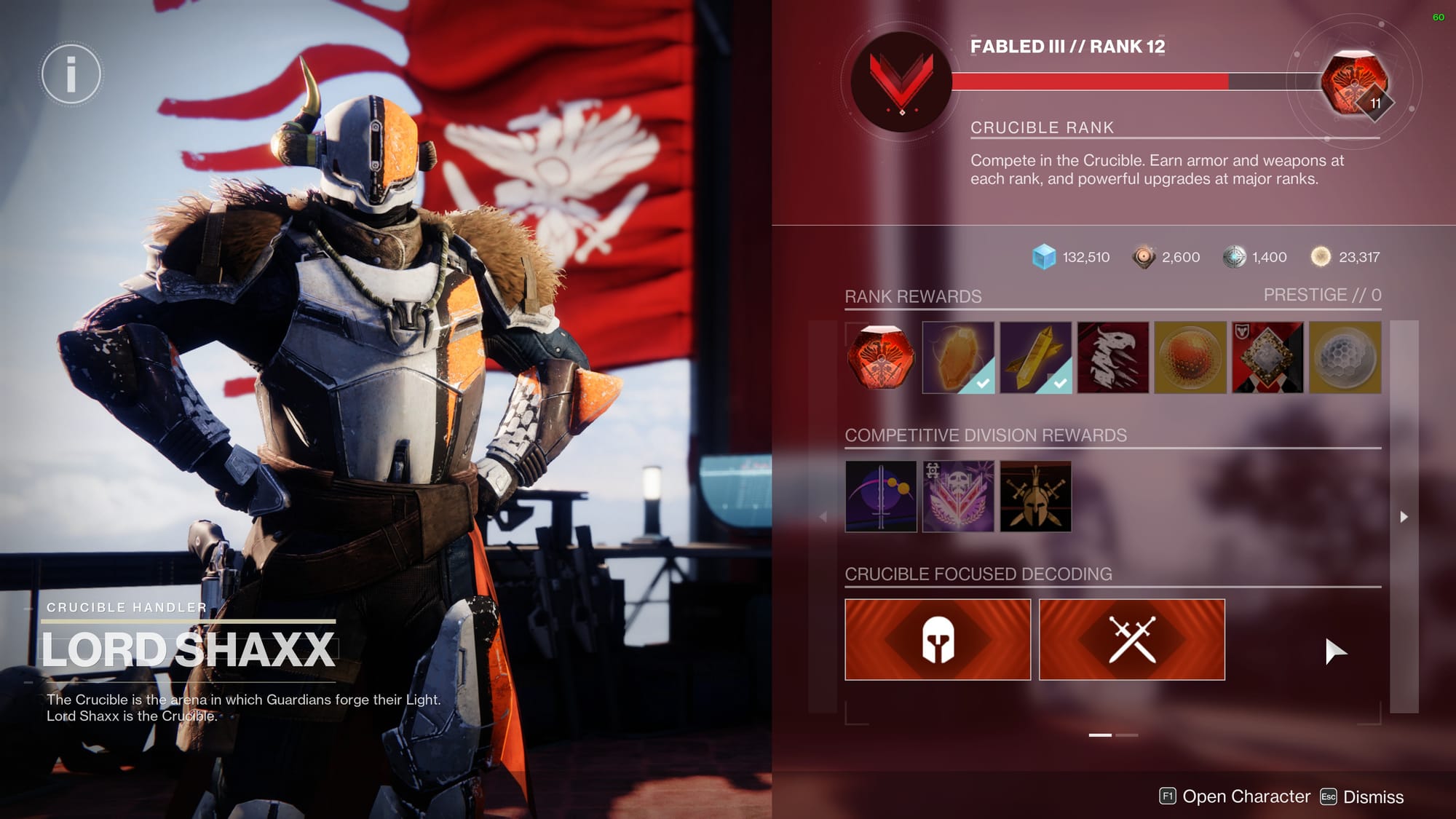
The Crucible was always divisive in Destiny 2’s own playerbase, and I think part of the reason was this gap that existed between the moderately-paced PvE game designed to make players feel powerful, and the much faster and more brutal PvP game. In my time playing, I knew several players for whom there was a real difference in comfort between the two modes, and PvP felt to them like a bewildering experience of repeatedly dying suddenly without understanding why.
From the PvP side, too, the nature of the game imposed limitations and design constraints on the Crucible that frustrated PvP players for the entire life of the game. Destiny 2’s peer-to-peer network architecture, for example, worked reasonably well in PvE but led to felt inconsistencies in the split-second resolution of PvP duels. That the Crucible was as good as it was speaks to how capable that team was and how in tune they were with the design tradition they were channeling, even working against constraints. That it still frustrated and divided players reflects that it still could only exist, being a product of the AAA industry in 2017, as one relatively small component of a greater whole aimed at a much broader audience.
However, the short time to kill did not make it a game of creeping through hallways like in Counter-Strike, or crawling through mud like Battlefield V. Guardians can double jump or hover through the air; they can slide for little bursts of speed and to shift their hitboxes out of the way. It’s a game of high-mobility dogfighting in the tradition of Team Fortress 2 or Titanfall, but played out as staccato bursts of violence across corners and over ledges.
While the Crucible had to function within the constraints of a bigger game designed primarily around PvE, it also got its longevity from the buildcrafting aspect of the looter shooter. Destiny 2 is a game about developing intimate relationships to its guns, about learning the nuances of how they behave, about getting attached to them. The game’s auto-aim system—which made that crossplay between controller and mouse players possible, but which purists might have derided—was actually part of this, it was one of the things that felt learnable about each weapon. Sniper rifles, in particular, always felt like this long process of getting to know each other; of dancing towards understanding: how far can I push it? How fast can I get? How generous is this thing?
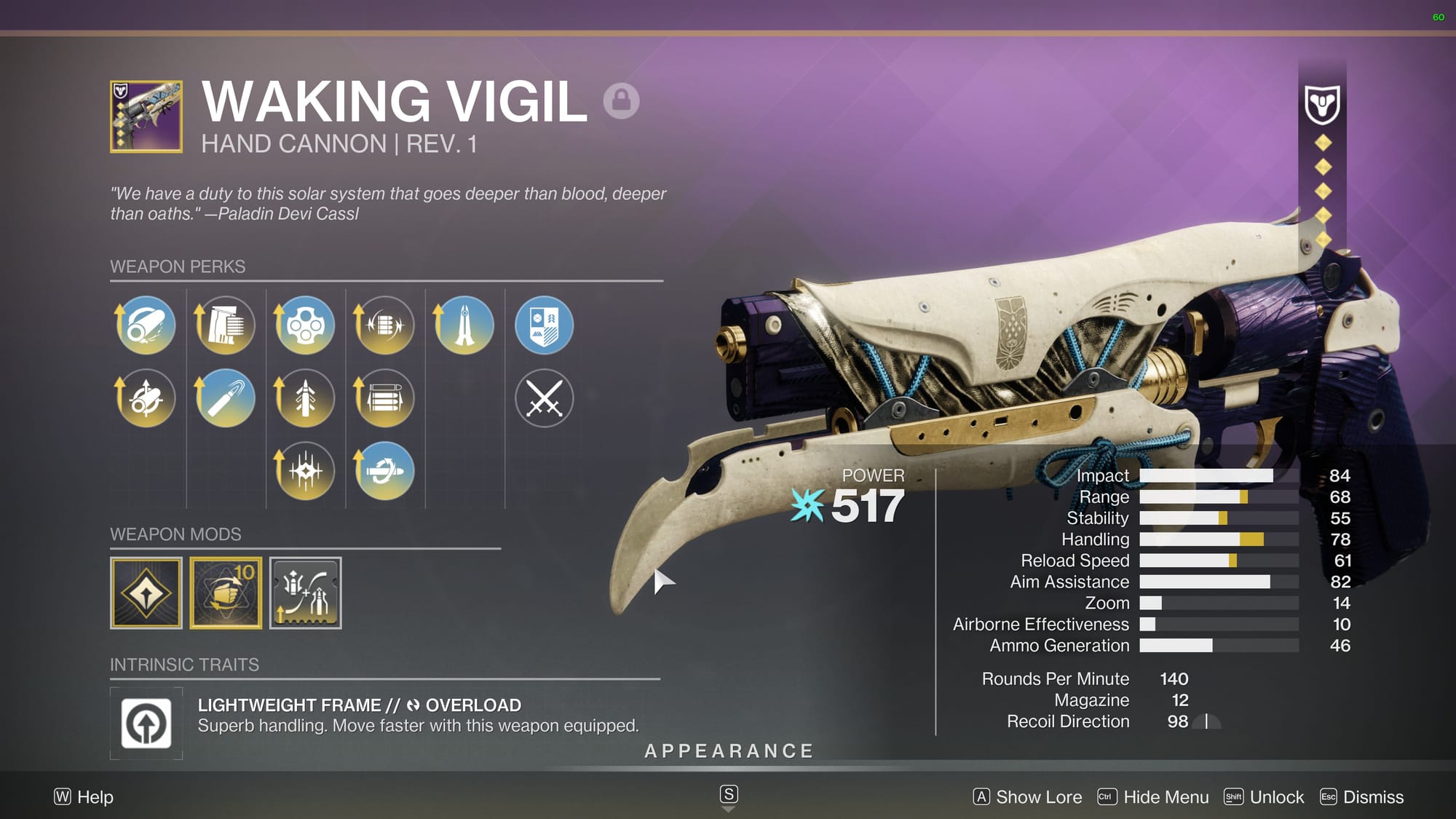
In PvE, there was always a shifting metagame around which weapons dealt optimal damage, benefitted the most from damage buffs, were the best way to dispatch bosses or clear large waves of enemies. But in PvP, there was always a delicacy to the personal relationship you’d build with any given weapon; just because a weapon is theoretically effective doesn’t mean you can effectively use it. This meant that every player had to discover for themselves what worked for them, what weapons spoke to them. I can still vividly remember the names and feelings of using many of my past favorites: dueling with Waking Vigil, taking cheeky snap shots with Bite of The Fox, blowing people away with Parcel of Stardust.
This is what always made me feel like the Crucible wasn’t diluting the old-school genre it was grounded in, but meaningfully evolving it: Destiny gave a multiplayer shooter the exploratory dimension of something like a trading card game, where game pieces are not fixed points but something that you have to discover.
That process of discovery is now coming to an end.
Signing up is free!
By signing up—again, it costs nothing!—you can read the rest of "Letting the Fires Die," and receive free newsletters and emailed articles from Remap!
Sign up now Already have an account? Sign in