
Death is foundational to the medium of video games, a form born out of asking players to try a task over and over again until they succeed. As the form has matured, the stories video games could tell have changed, too. Death in games became not just a reaction to improper button inputs, but in some instances, explorations of the human condition. Those explorations, though, are often limited to sadness. It’s rare that game stories tell angry stories of grief. Of jealousy. Of feeling robbed of a promised future, of a past that’s rarely exactly how your nostalgia suggests.
Forever Ago, the first game from developer Third Shift, sits with these complicated feelings.
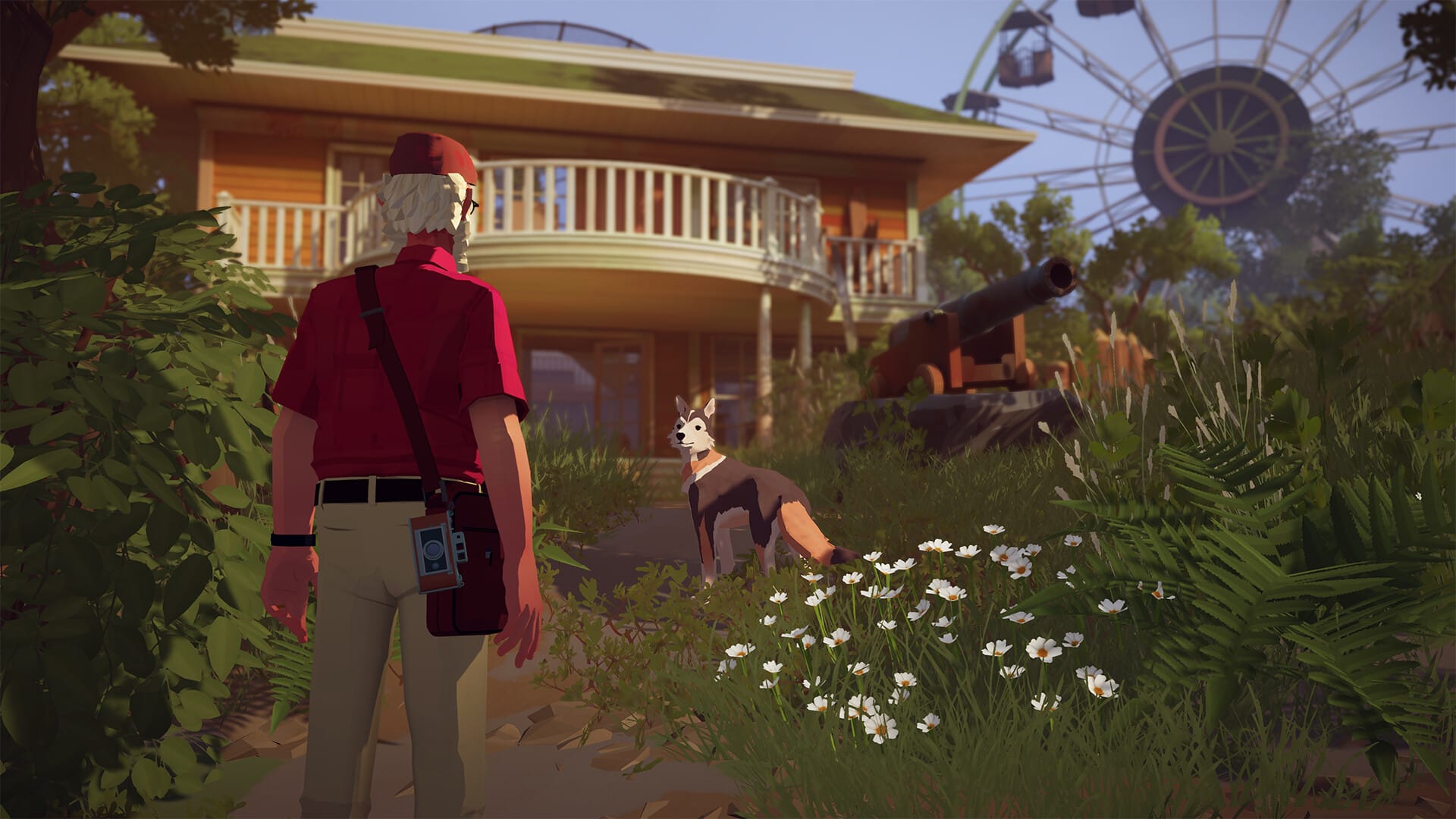
It tells the story of Alfred, an elderly man who recently lost his wife. Her death does not happen on-screen. It does not come as a surprise. Instead, we pick up in the aftermath, as Alfred, frustrated and alone, begrudgingly decides to go on a trip designed by his wife ahead of her passing. Along this journey, Alfred will retrace the steps of his relationship, the lies we tell ourselves about the messiness (or lack thereof) in long-term partnerships, and what life means in the absence of what we previously used to define it. It’s a flawed game, one whose story and voice acting is more powerful than its interactive elements, which largely amount to the player slowly walking from one spot to the next and pressing “A.” Yet, I was still very moved by Alfred’s journey, even I'm permanent mark for any vaguely story like this.
It’s worth experiencing, in part, because of how it sits with Alfred’s anger and how he’s unable to find vehicles to express his profound sadness without lashing out at other people. His struggle to unpack his grief becomes projectile vomited onto anyone who happens to end up near him.
Forever Ago doesn’t necessarily endorse his anger, but it also doesn’t shy away from it, either.
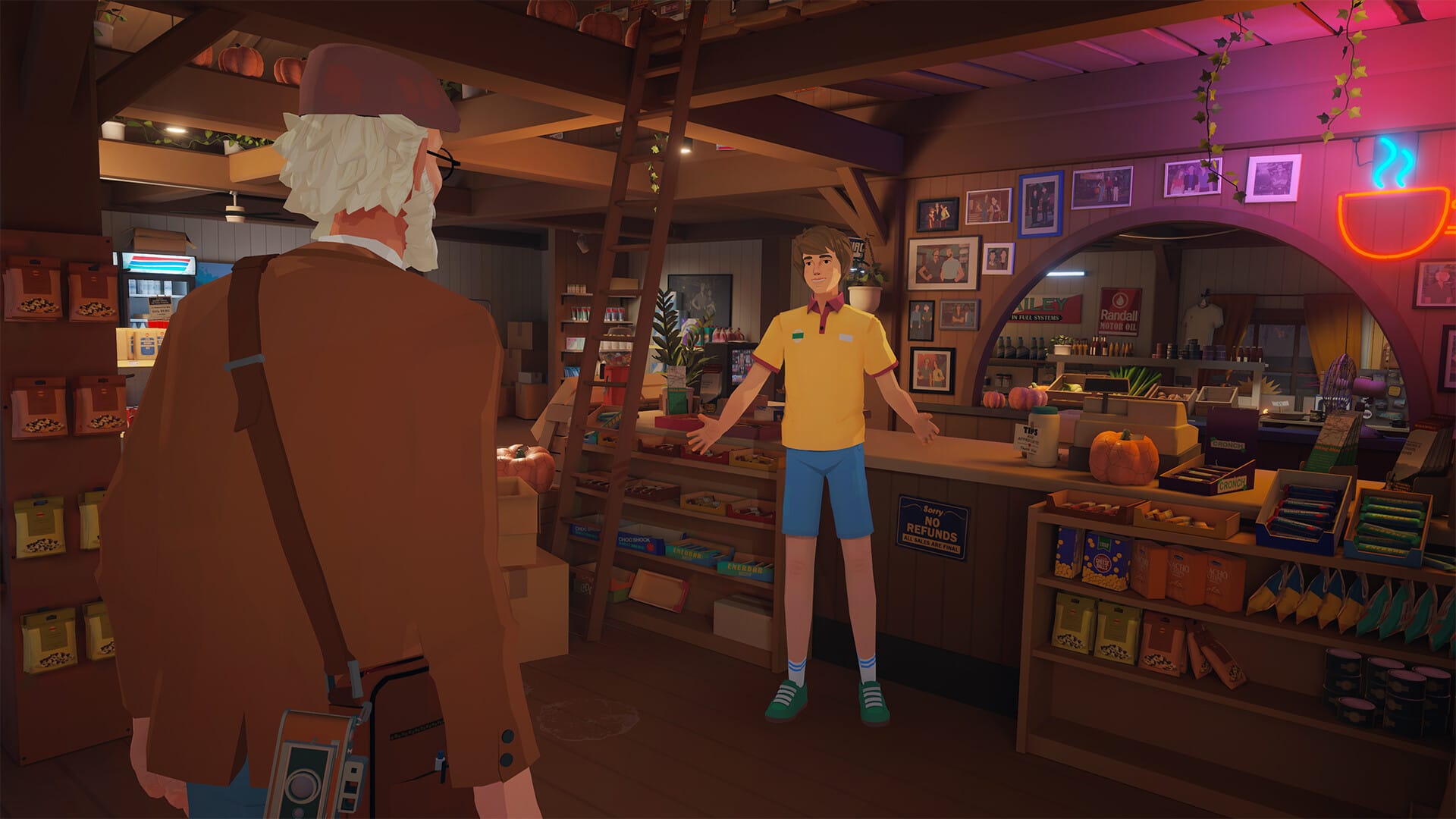
In Polygon’s review of Forever Ago, critic Giovanni Colantonio called the game “the most Annapurna game of all time” and “an overly sentimental tear-jerker, but it's still sincere.” He’s right on the money. If Forever Ago was a movie, you’d call it Oscar bait. A story about a closed off older man learning to experience feelings and growth in the wake of his partner’s death?!
It’s true. And yet there’s a reason it’s called Oscar bait: when done effectively, it works. As a game, you won’t find much in Forever Ago you haven’t seen before. But you’ll still be crying.
“Grief isn't necessarily a topic that…” said Third Shift co-founder and art director Fabian Denter on Forever Ago, before pausing briefly. “People don't really wake up in the morning and say, I want to be sad today. It's a hard topic. It's very tough to deal with. But we also think that there's some beauty in the hope that comes when you work through grief. And we want to show that.”
“We are at the age where our parents and grandparents are at that age that Alfred is now,” continued Denter. “And it's weird—like, back when we started seven years ago I was always thinking of Alfred as part of my grandparents' generation and now, seven years later, it's more like my parents' generation. Which is a weird shift in the perception of age and all that stuff.”
The “we” in this context is Denter and Third Shift’s other co-founder, Kai Brueckers. I called Denter an art director on Forever Ago, but when you ask Denter and Brueckers about their roles, it’s less specific. Denter claims responsibility for “anything regarding the art direction” or “everything visual,” while Brueckers handled “writing of the game, most of the programming, and also the UI.” It’s a small team that is, for the most part, a game made by Brueckers and Denter.
The two are also, importantly, self-described best friends. They’ve known each other for more than a decade in a previous life, where they worked in advertising. Besides a shared love for games, they also had complimentary skillsets that, when combined, might let you make a game.
“We wanted to make something with at least a little bit more meaning than advertising and weird software products,” said Denter. “Back then we would sell the brainwashed and dumb version of these feelings tied to products. Now, we wanted to tell an actual story to actual people.”
art19:cab04b24-f66b-4416-90ac-9b85481c7690
Forever Ago, unsurprisingly, started as a hobby project on nights and weekends, the latest in a series of experiments where two non-game developers were figuring out how to make games. It’s easy to come up with an idea for a game, it’s harder to program an intuitive camera system.
The first trailer for Forever Ago, for example, listed a release date of 2021 when Denter and Brueckers were pitching the game to publishers. In an early piece of marketing from the game’s eventual publisher, Annapurna Interactive, Denter confidently remarks he was “excited to see when people really play this thing in the future, and I hope this will be really soon.” It wouldn’t!
"People don't really wake up in the morning and say, I want to be sad today. It's a hard topic. It's very tough to deal with. But we also think that there's some beauty in the hope that comes when you work through grief. And we want to show that."
“This being our debut game, we made a lot of mistakes at the beginning,” said Denter. “The first three or four years were pretty much us fucking around and and then only later finding out.”
They made the usual rookie mistakes, like polishing sections of the game to make them look “good” when it would have been more useful to let them look “bad” and move onto other parts. There are, for example, whole sections in that trailer linked above that aren’t in the final game.
Other pieces, however, have largely stuck around intact.
“I’m always surprised how sometimes things that we worked on like four or five years ago are still in the game and still look nice,” said Brueckers, pointing to Forever Ago’s in-game journal.
In fact, the game’s opening, which takes place in and around a gas station, was there from basically day one. It was the slice of game I played over the summer, ahead of release, and it was a different slice of game that Denter and Brueckers created when pitching to Annapurna.
Annapurna showed interest in signing Forever Ago around Christmas 2020. Bruecker and Denter were both working from home, amidst the earliest days of the COVID-19 pandemic. By June 2021, things with Annapurna were becoming real real. They were getting paychecks from their own company for the first time. Well, Brueckers was. Denter had to wait, because in Germany, it’s not uncommon for you to be required to give several months notice before leaving.
In this case, Denter had to give his advertising job three (!!) months' notice, a timeline that was before they’d formally signed a deal with Annapurna. Was the deal probably going to happen? Yes! Was there a chance it could fall apart, leaving Denter without a job entirely? Also yes!
Over the game’s seven years of development, Denter’s grandfather, who served as partial inspiration for Alfred, passed away. His grandmother had passed away 10 years ago, providing a glimpse into a version of the grieving process they were trying to capture inside Forever Ago.
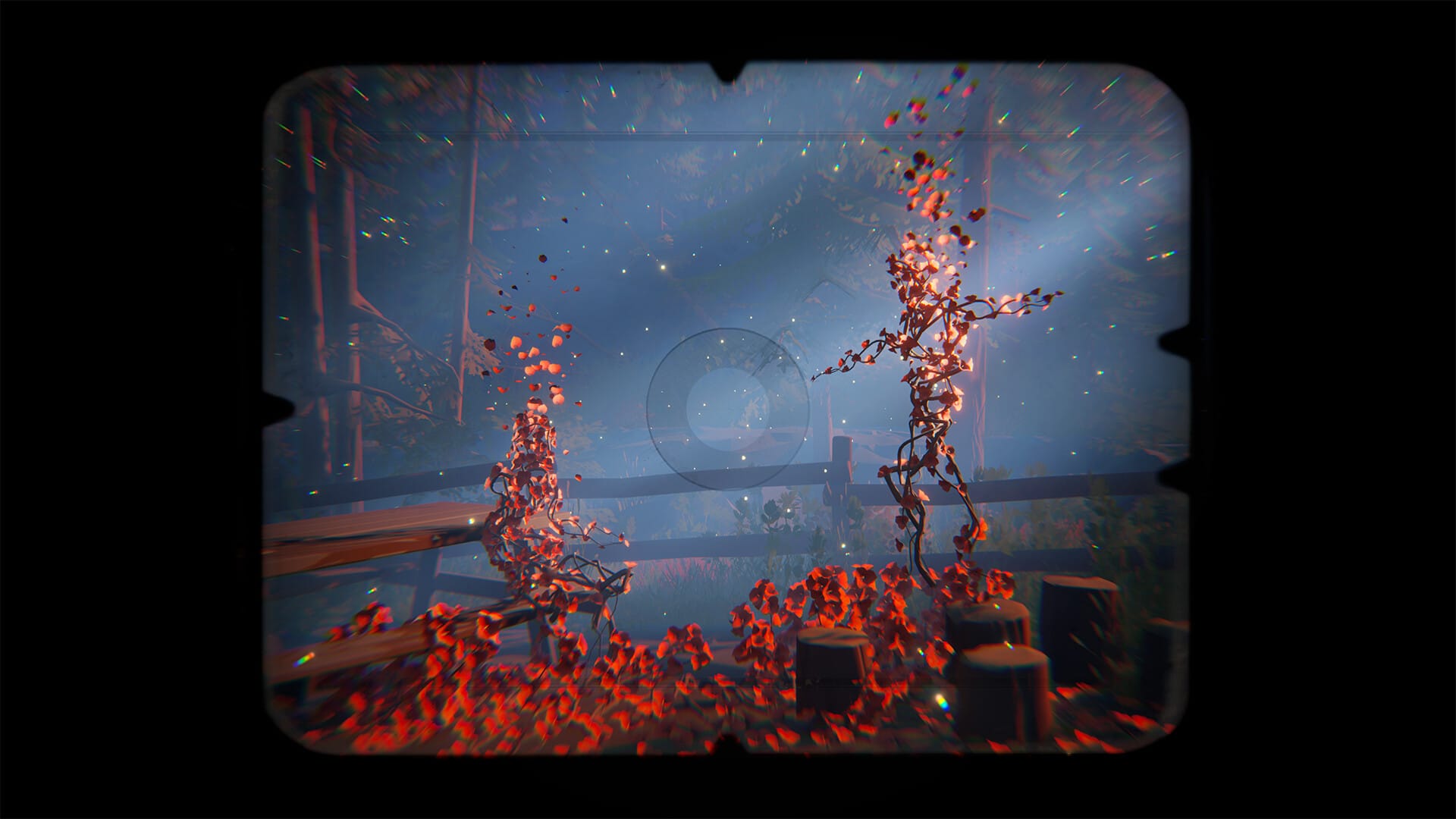
It proved personal in more humorous ways, too. In Forever Ago, Alfred carries around a camera, and he’s constantly developing pictures to be placed into his journal. Brueckers jokingly called Denter a “great photographer” in his previous advertising life, Denter took lots of photos.
“I was mainly taking pictures of microwaves and fridges at my own shop,” said Denter. “[laughs] It made me sad, and [I thought] maybe this is the right mood for this game.”
Well, someone has to make the microwaves look beautiful, I told him. And, perhaps, that proved inspiration for making the microwaves inside Forever Ago look their most beautiful self, as well.
“This is the most personal item in the game I would say,” he said. “The appliances in the kitchen, probably. It is a very personal game in that regard.”
“As I said, everybody works through grief in different things,” joked Brueckers.