
When Séverin Larose was a child, he would hang out with his cousin and watch him play video games. That’s the key word: watch. Larose’s parents long had a zero tolerance policy for video games, and even though his parents were out of sight, they weren't out of mind and he respected their policy.
But he could use a computer, and he started building things based on the games he watched, like Pokémon. That’s how he found Adobe Flash, the tech foundation for influential gaming platforms like Newgrounds and Kongregate, where designers like Edmund McMillen were born.
And it was where Larose and that same cousin would become game designers themselves, developing their craft as they climbed ranks of Kongregate. That arc led them, years later, to making Minishoot’ Adventures, an intoxicating combination of old school Zelda exploration, bullet hell shooting, and the “oh, shit, I can do this now” thrill of a Metroidvania. It came out on Steam in 2024, but many ( including yours truly) areonly now discovering it on consoles.
Minishoot’ Adventures—and, yes, we’ll explain the whole apostrophe thing later—comes from SoulGame Studio.
art19:dea1f249-fe10-40dc-b1c0-13e0e6b4549c
It’s a studio largely made up of Larose and his cousin, Adrien Sèle. They've been making games for more than a decade, stretching back to 2011’s Soul Driver, a Flash-based pursuit game. (It’s still playable online, but you’re better off checking out their collection of Flash works on Steam.)
It was their first “hit” and its success was largely accidental. They uploaded it for fun—and then it took off.
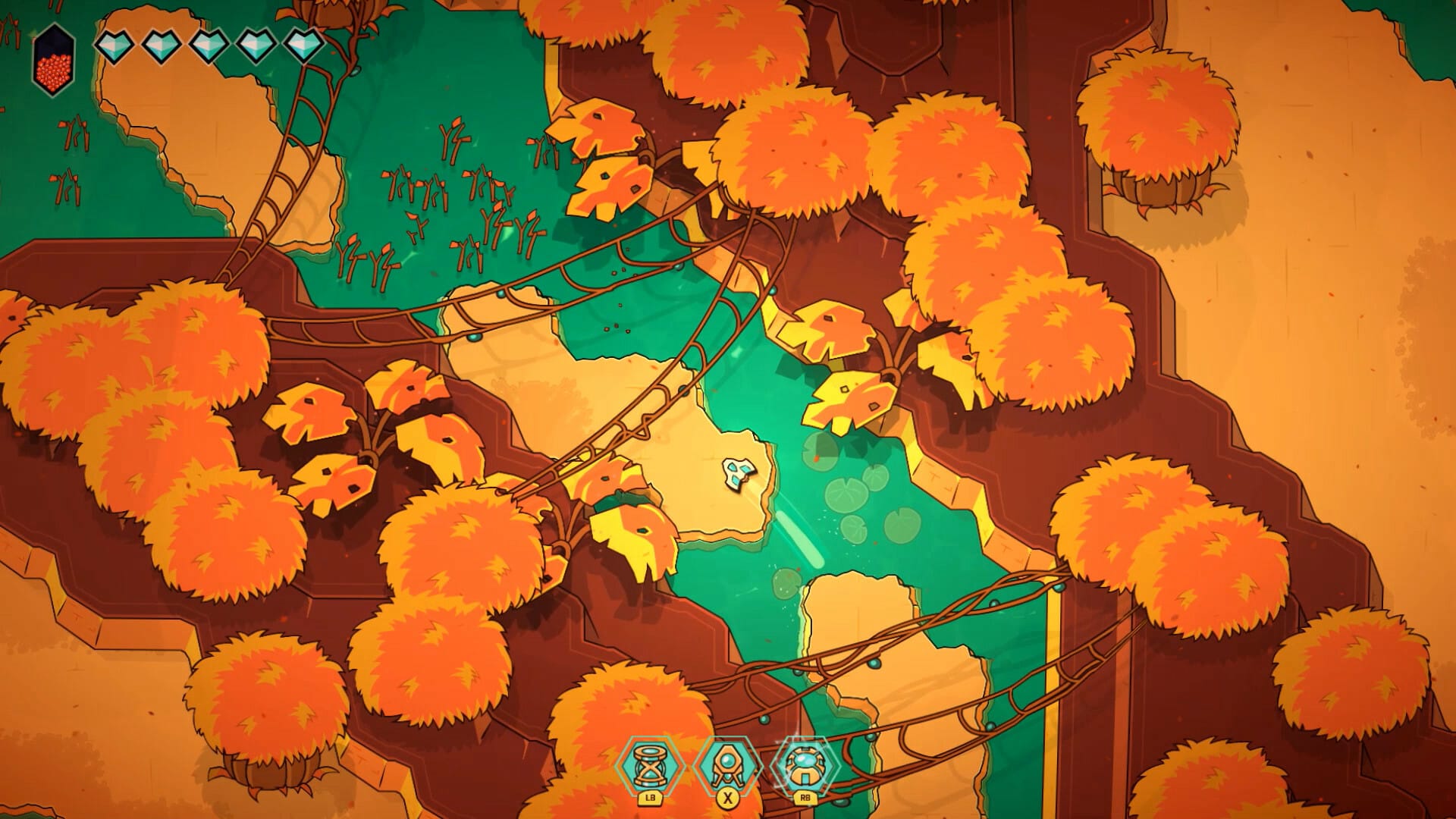
“Every day, I played [a] game that came out on Kongregate,” said Larose. “Every day I tried them. […] Armor Games [a publisher] reached out to us and said, ‘Dude, you just published a super successful game with zero sponsors on it, what the hell? Do you want some money so we can put our logo on your game? What are you doing, guys?’ And we were completely out of touch with how this economy was working. We had no idea that a sponsor existed.”
At the time, Larose had a simple goal: reach the top of the Kongregate charts. The games he was deciding to play were based on what was at the top of the charts, so why not him, too?
“I know I was a bit pretentious,” he said, “but it was my dream.”
That dream came true a few years later, when SoulGame’s RPG, Sword and Souls, hit the top—but it came at a precarious time for the path SoulGame has chosen to make games.
“It was the number one ranked RPG on Kongregate,” he said. “I remember being so proud because it was, really, my dream. At this moment, Flash was dying. It was the end of Flash.”
Flash died for a number of reasons. Steve Jobs thought it was a terrible fit for the iPhone because of its performance issues—a position that never changed, even after his death. The rise of competing technologies like HTML5. The mass adoption of platforms like Steam.
(Interestingly enough, the joy of playing games, both originals and rip-offs, on weird websites remains alive and well because of the infusion of Chromebooks into school classrooms.)
In this moment, SoulGame decided to pivot to building games in Unity and needed an idea they could start riffing on. You hear this a lot when you talk to game developers, though. An idea rarely stays simple, especially if you like the idea. The problem becomes finding a way to stop adding new ideas.
“A small game to chill out,” said Larose. “Simple shape, explore a little world, grab a key, open the door, be the boss, upgrade your ship, and we will be done, right? It's a simple idea.”
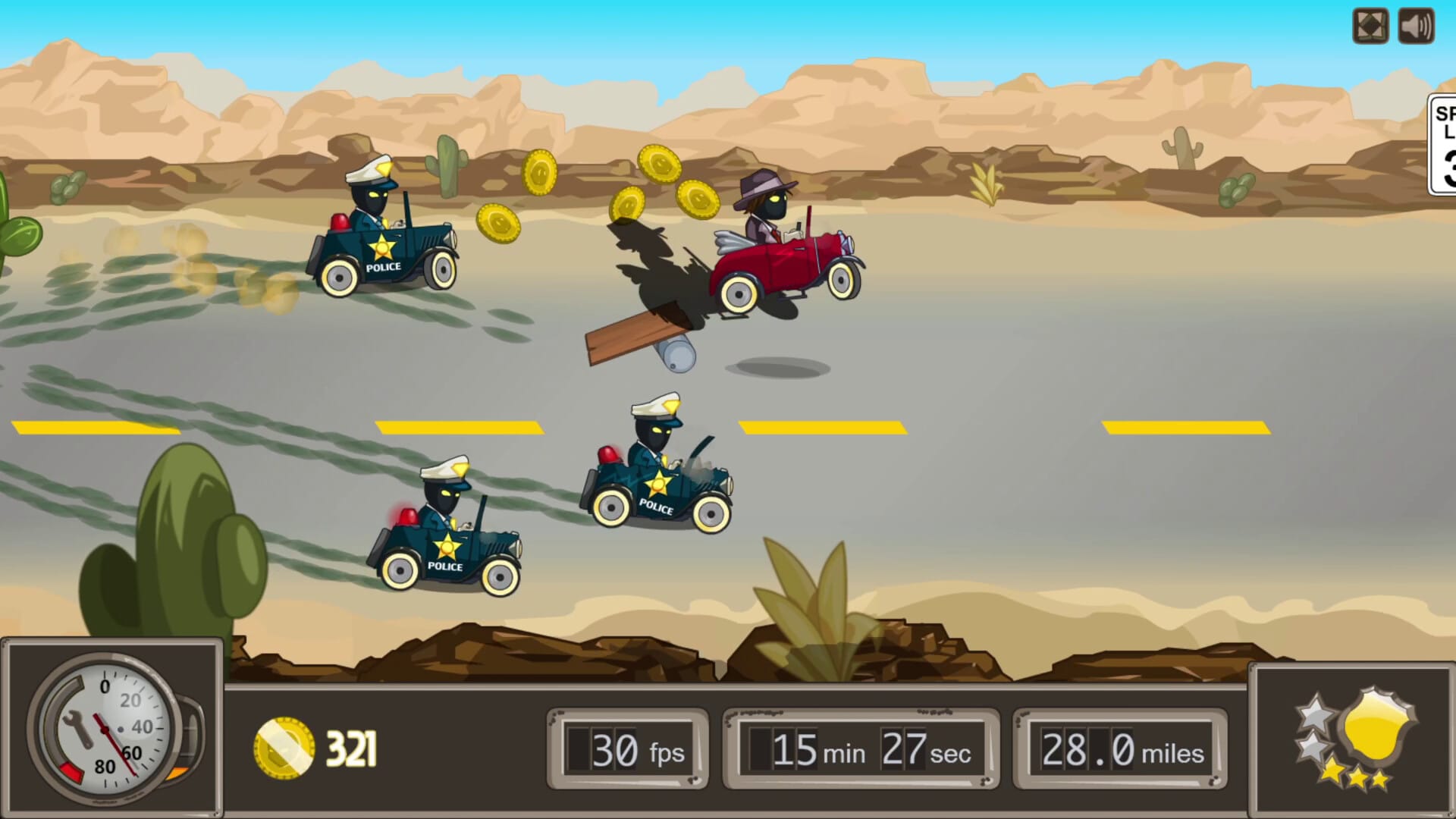
Simple.
And then, very quickly, Minishoot’ Adventures stopped being simple.
“When you think you're going to go small, you actually fail to plan for how it's going to stay small,” said Larose. “Because this is a tricky part. And this was planned really, really, really badly! We grew like everybody else. The scope was just growing because we had no idea how to make a low-scoped Metroidvania, because it is actually very hard. And if today you tell me, ‘Okay, make a small scope Metroidvania twin stick shooter,’ I'm going to be honestly stuck because I have no idea how to make one. All I could do was make a big one.”
So, Minishoot’ Adventures got bigger. And bigger. More biomes to explore. More upgrades to unlock. More dungeons to conquer. More bosses with screen-feeling bullets to dodge and weave. What was supposed to be simple sprawled into an adventure that can take 20 hours to finish, if you’re hoping to plunder every secret SoulGame has squirreled away within the world.
“When you think you're going to go small, you actually fail to plan for how it's going to stay small. Because this is a tricky part. And this was planned really, really, really badly! We grew like everybody else. And if today you tell me, ‘Okay, make a small scope Metroidvania twin stick shooter,’ I'm going to be honestly stuck because I have no idea how to make one."
Much of the secret sauce for Minishoot’ Adventures is found in having terrific combat in a subgenre that often lacks it. The great joy of many Metroidvanias is the exploration part. Being told you need to find the red laser to open the red door, getting teased by that same red door every time you pass by it, and then eventually nabbing the red laser and the door opens. It’s a genre full of mystery.
The game came together in the end, but it didn’t always feel that way to Larose. SoulGame was two years into development of Minishoot’ Adventures before it had anything resembling the game’s current world map, one neatly divided between different and distinct areas. Before, players would aimlessly wander a very loosely connected landscape in search of things to do.
The “things to do” was also a problem. It turns out that building a big map isn’t enough.
“That was a big part of my understanding of how to create a space that people do want to explore,” said Larose. “Fun fact, you have to put stuff in to find! It sounds stupid. It took me one year to understand this. I built the tower, the dungeon, the temple—providing you with actual, at least to me, rewards that felt that would justify the time you spent looking for them.”
Plus, Larose settled on a new mantra: 20 seconds. It should take no longer than 20 seconds for the player to revisit a previous part of the map. It could take longer (or shorter) depending on how well you navigated the map and its enemies, but, in theory, it should take 20 seconds.
“If you go slow that's on you, man,” he joked.
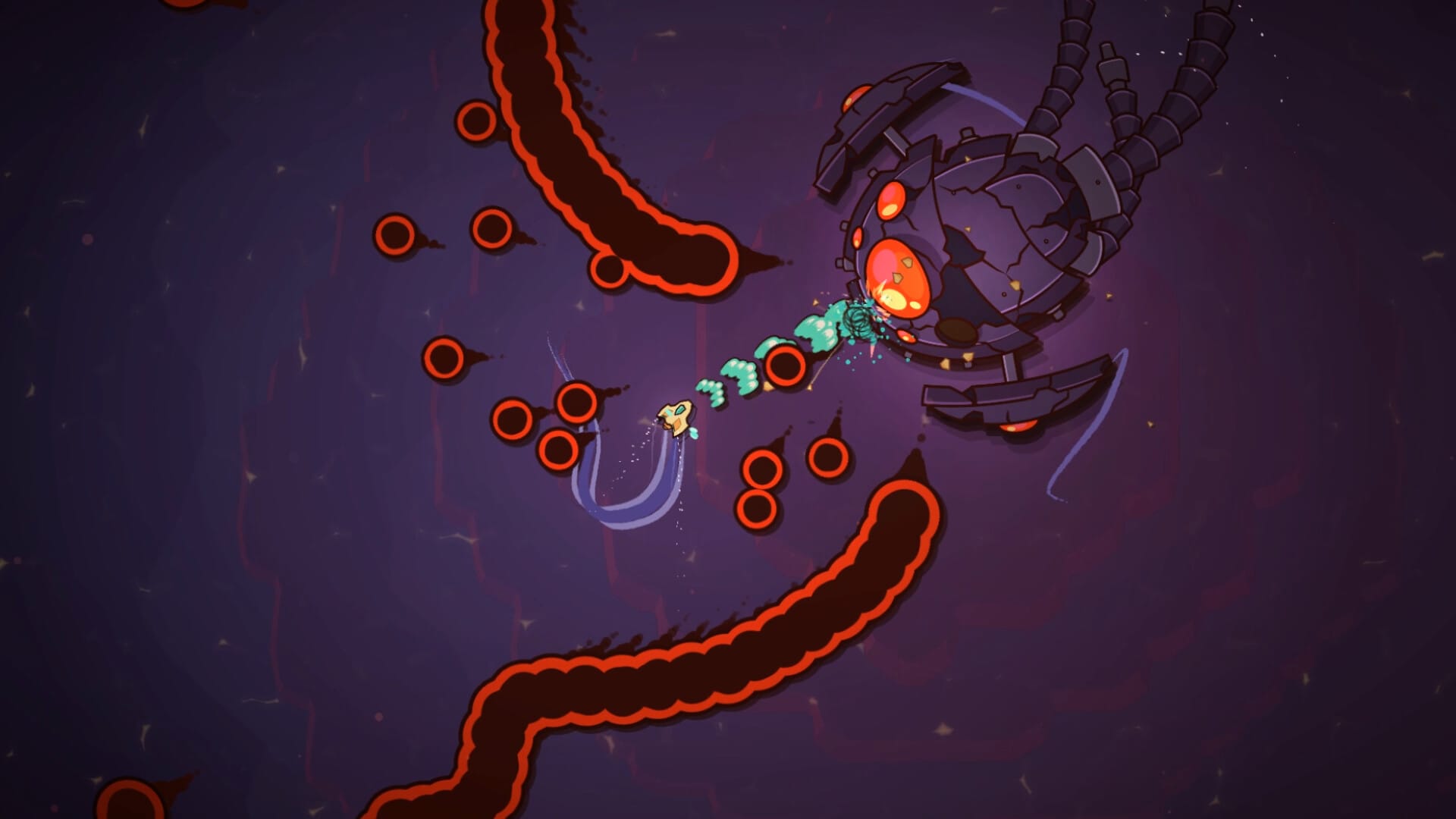
On some level, as expansive as Minishoot’ Adventures became, the reason the game works at all, the reason it had its hooks in me for the better part of the week, was…well, pretty simple.
“I think one of the things that we were fortunate to discover,” said Larose, “is that at the root of the thing, it's just a child’s desire to shoot stuff while exploring. It's nothing fancy. I just wanted to shoot stuff while exploring. It's really that simple.”
Oh, right. The apostrophe thing. When you look up Minishoot’ Adventures on any platform, whether it’s Steam or the eShop, you might type in “Minishoot Adventures” without realizing the actual title includes a bizarre-looking apostrophe in the title. It’s there for a reason—sort of.
“Oh man, please, please don’t,” laughed Larose when I asked the apostrophe.
Thankfully, I promised to be kind. It’s not like my French is any good, either.
“Okay, so I'm not fluent in English, as you can hear,” he said. “The project was called Minimalist Shooter. I figured that if I would contract Minimalist into Mini and Shooter into Shoot. I could use the apostrophe as a contraction. You know, if you say ‘writing you back’ and you don't write a ‘g,’ you put the apostrophe. And so Minishoot would be like a contraction of Minimalist Shooter.”
Apostrophe or not, the journey to developing Minishoot’ Adventures and then eventually landing on Nintendo’s eShop was an emotional full circle journey for Larose, who attributes much of his early love for games to the earliest Nintendo creations and, specifically, The Legend of Zelda.
Like many developers, it was a surreal moment to see Minishoot’ Adventures next to Zelda on the eShop, the digital equivalent of walking down a store and seeing boxes next to each other.
“Being, for just a second, alongside my all-time favorite game—it's an incredible experience,” said Larose. “I’m not sure I have completely understood how powerful a moment it is.”