
One of my earliest memories is bounding into my parents' room, squealing at my dad to come and watch a replay of my first goal for England in International Superstar Soccer 64.
The goalkeeper sprinted to intercept my defence-splitting pass, bent one knee, curled his arms as if to cradle a baby, and scooped up a ball that wasn't there—my striker had already nipped in front and scored in the open net. "Woooow," my dad said, in the same voice I hear him use now when he speaks to young children. "Well done Samuel!"
A crummy goal, really. But to me it was as good as Beckham's halfway-line lob against Wimbledon in '96, as Eric Cantona's nonchalant chip against Sunderland in 1997 (I was one of those many '90s "glory hunters" who supported Manchester United despite living nearly 200 miles away in Essex).
If football was religion for me and my friends, then football sims were our cathedrals. Our allegiances to EA's FIFA series or Konami's Pro Evolution Soccer were tribal but transient, flipping each year depending on which had the crisper passing, the hardest shots, the most realistic faces, or the silkiest skill moves. We rotated through each other's houses, spending schoolday evenings and weekends passing two controllers reverently between us. The sacred rule: winner stays on.
My obsession lasted well past my teenage years and I built entire friendships on FIFA at university. When I lived with my best friend in my mid-20s we wrote all the results and all the scorers on pieces of A4 kept in the top drawer of the TV stand. By the time he moved abroad we'd stacked a book's worth of paper.
The total decay of football sims over the past 15 years has therefore been painful to watch.
Pro Evo has capitulated, reborn as an impotent free-to-play game that's incomparable to the series I loved growing up. Shorter-lived series—the likes of World League Soccer, This Is Football and Virtua Striker—are incompatible with modern development costs.
Everything but the FIFA series, now called EA FC, has withered and died, leaving a bland monolith whose only competition is the previous year's entry, and which has consistently neglected its sizable singleplayer community to feed the hungry gacha beast of Ultimate Team. Its parade of lucky-dip player packs generates a massive chunk of EA's yearly revenue and looks, from many angles, an awful lot like gambling (you cannot buy EA's premium currency in Belgium because of gambling laws).
And pending regulatory approvals the only football sim in town will soon be majority-owned by the sovereign wealth fund of Saudi Arabia, the country that last year executed 347 people, the most in its history, including the journalist Turki al-Jasser and two young men, Jalal al-Labbad and Abdullah al-Derazi, who were arrested for alleged protest-related crimes committed when they were 16 and 17.
This deterioration is mechanical, moral, and perhaps inevitable. It mirrors some of the patterns of the wider games industry, where corporate greed and the resultant layoffs have squashed experimentation and where the values of owners or executives turn choices about what we play into ethical dilemmas (see Xbox, Rockstar, Ubisoft, Epic Games, etc).
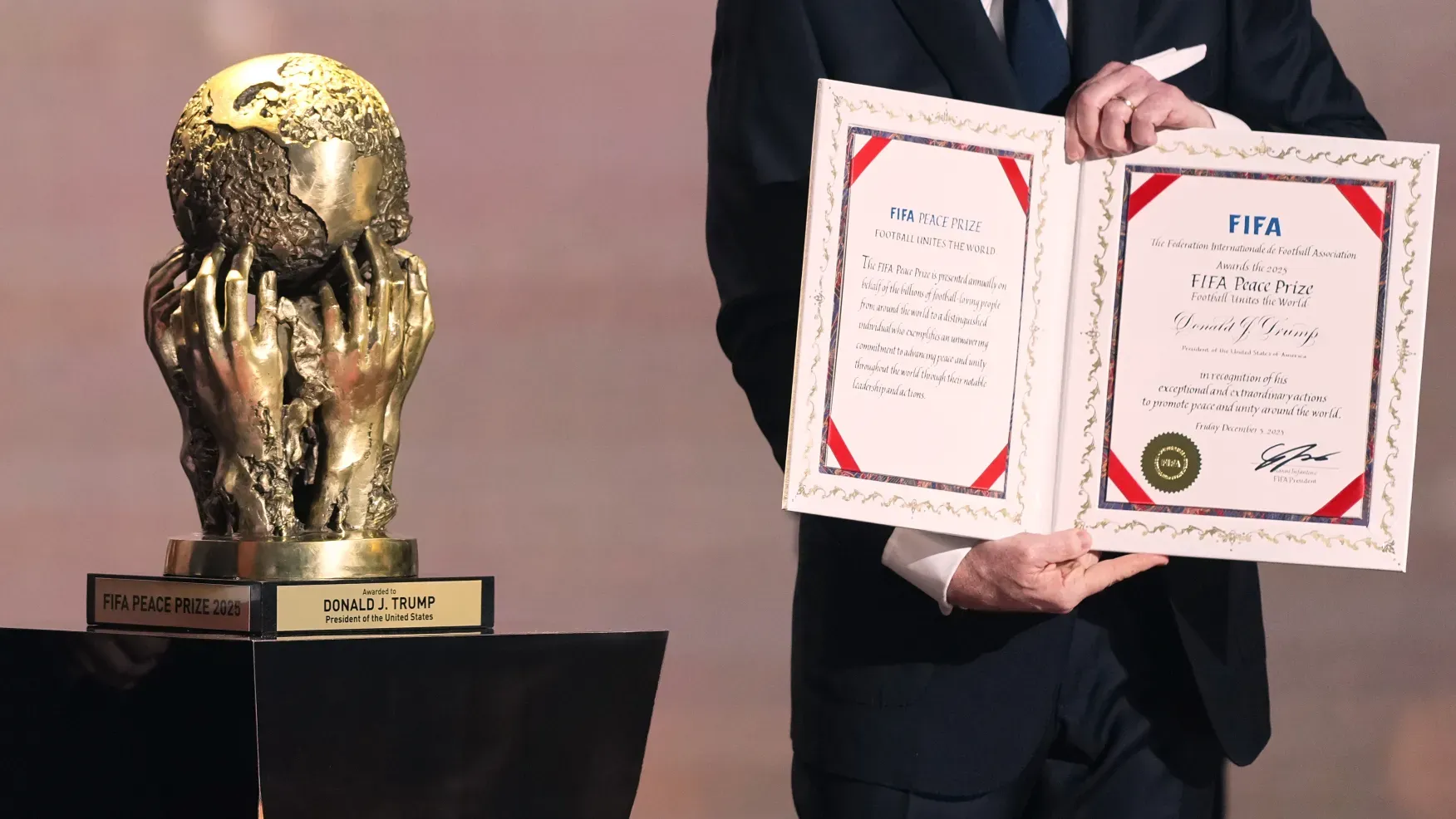
But it also mirrors what I see happening in the sport I still love. Saudi Arabia, which already owns Newcastle United, was recently selected by FIFA to host the 2034 World Cup, a decade on from Qatar 2024, a tournament built and made possible by migrant workers facing human rights abuses. FIFA's selection came exactly a week after its fawning president Gianni Infantino handed a made-up Peace Prize to President Donald Trump.
And I couldn't help but notice that the way the Saudi-led consortium bought EA—a "leveraged buyout" with borrowed money—was the same way the billionaire Glazer family purchased Manchester United in 2005 in the face of fan opposition, saddling the club with enormous and expensive debt. Sir Jim Ratcliffe, our minority owner and odious head of football operations who recently claimed the UK had been "colonized by immigrants", has now closed the staff canteen at our Old Trafford stadium to cut costs, but the players still eat for free while earning up to £350,000 ($412,000) per week.
Yet still I watch. Still, I play.
To understand where we are, I think it's important to know how we got here.
My childhood was the golden age of football sims. When FIFA arrived in late 1993 we already had the Kick Off series, Sensible Soccer, and SEGA's Striker. Soon they were joined by Actua Soccer and Komani's International Superstar Soccer, which eventually spun off into Pro Evo. This is Football, a heavily licensed Sony-published series that ran for seven years, launched in 1999. I spent the second half of 2002 playing RedCard, a surreal game with unlockable animal teams and a brutal tackle mapped to each face button. You could literally drop kick a dolphin.
"The genre was really vibrant back then," says Richard Moss, author of A Tale of Two Halves: The History Of Football Video Games. "There's games that are hyper-violent, there's stuff where you're playing with cartoon characters, all this weird stuff going on. And they weren't really concerned with each other at that point."
The rising costs of development in the PS2 and Xbox era and the consolidation of players' attention eventually left just FIFA and Pro Evo standing. FIFA was arcadey football for the masses backed by a huge marketing budget and comprehensive licensing agreements. Pro Evo, Moss says, was the cool game for purists. Slower, more tactical, emphasising passing and movement.
The rivalry inspired both sides to improve.
Signing up is free!
By signing up—again, it costs nothing!—you can read the rest of "Enclosing the Virtual Pitch," and receive free newsletters and emailed articles from Remap!
Sign up now Already have an account? Sign in