Evolution and revolution are the only constants in Formula 1. No other sport on earth so frequently throws out its entire rulebook, challenging teams, and drivers to adapt and build the best new car they can to the new technical formula that gives the sport its name. 2026 brought more changes in a single year than at almost any point in the sport’s history; new engines, new "active" aerodynamics that work differently than ever before, a brand new team, and two brand new engine manufactures.
In practice, these new regulations have been controversial, to both fans and the drivers, and much handwringing has been made about how "Mario Kart" things have gotten. But if the video game comparison is in vogue, then the story of this year’s F1 game is a curious one.
There is, in fact, no "new game" from Codemasters to go along with these momentous changes, a curious move from a franchise that hasn’t missed an annual release since 2009. Instead of a brand new game, we get a DLC update for last year’s excellent F1 25 that strives to showcase all that’s new about F1, a choice that struck me as odd given what an important season this was for the sport. But, after over a dozen hours, I think I see the forest through the trees as to why one of the biggest years in the sport's history ended up being adapted this way.
Since their acquisition in 2021 Codemasters has had one of the strangest roles in all of the EA Sports stable. While they’re all still expected to put out a yearly release, add a feature or two, maybe adapt a small rule change if one happens to come around, it’s all mostly roster updates, tweaks, and a coat of paint. Not to denigrate the work that goes into an annual video game release in our era of 4k textures and always evolving expectations, but it’s not like the Madden franchise has had to adapt a brand new ball in the last 30 years, you know?
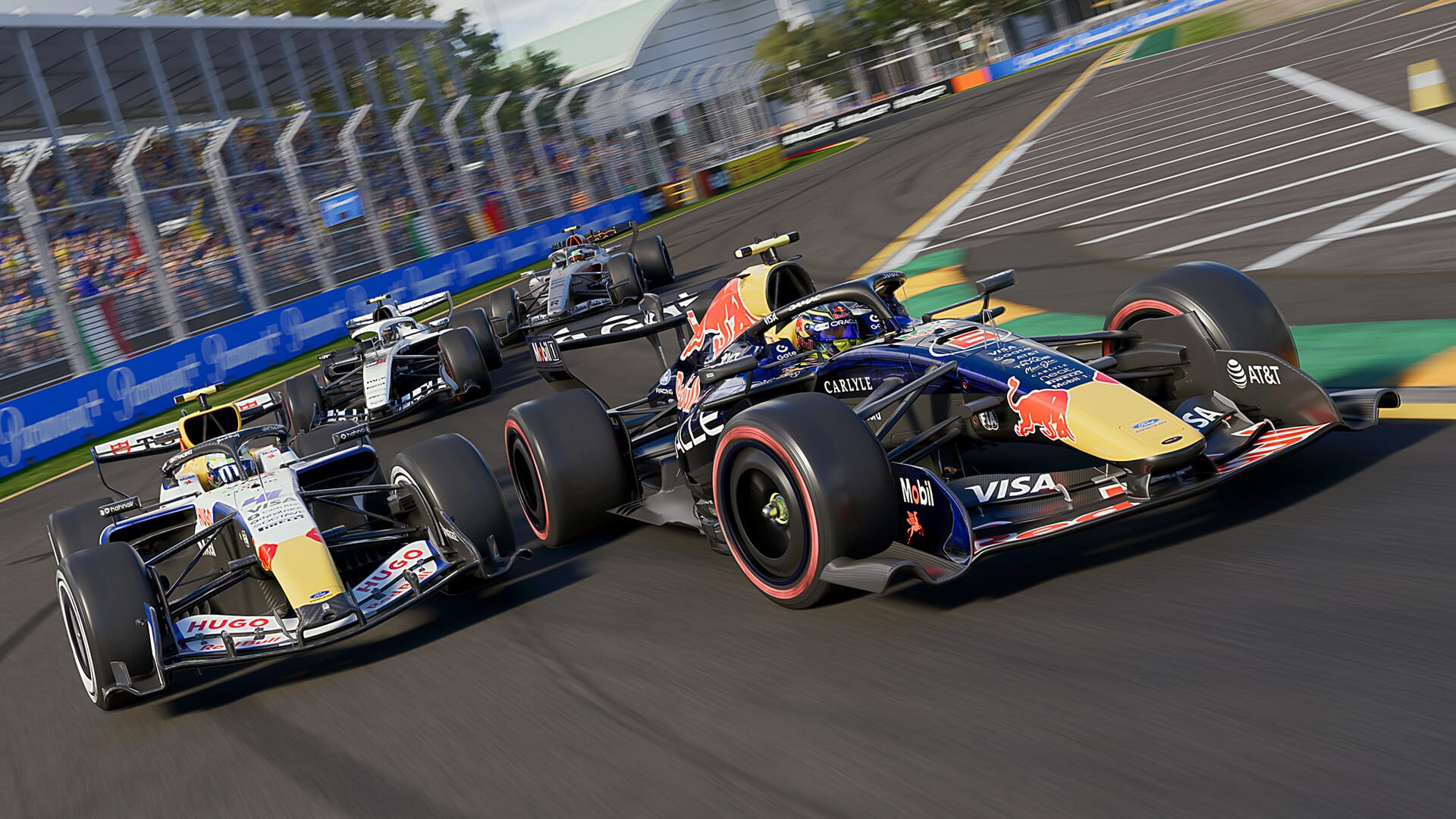
After the last regulations launched in 2022, Codemasters has had sort of an up and down reputation with how well they’ve emulated the ground effects cars and their unique quirks. I don’t blame this on their acquisition by EA, but it’s not great timing. Especially as more and more effort has been made to bring the games in line with other offerings in the realm of EA Sports, including a lot of time and effort being spent on odd additions, such as F1 22’s addition of street cars, which was shockingly awful for a company that’s made racing games of all stripes before. But, on the flipside, you get the shockingly excellent series of Braking Point campaigns, which add a soap opera family drama (which I and my Tran Girlismo co-host Victoria had Rob on to talk about at length) and some clever scenarios to break up the usual routine of a normal driver career.
After a few up and down entries, last year’s F1 25 is maybe the most perfect Formula 1 game we’ve had in years. It discarded 24’s awful handling model, completely revamped the already pretty wonderful My Team feature, and gave us a new Braking Point installment that I actually think was one of the best portrayals of complicated grief that video games as a medium has offered. Yes, I know I am saying that about the story mode in a sports game, but like, give it a shot!
So, when it was announced that F1 25 was going to be the basis for a DLC to showcase all the changes coming this year, I was at least assured that they were working with the best bones they could. But, with a physics and handling model so focused on cars that operated in such different ways, moving to these new, lighter, more nimble, energy starved cars was going to always take some getting used to, and it had to be a simply massive amount of work for a studio that has continued to do more with less, especially as they deal with rounds of layoffs.
It has been a very long time since a racing game has asked me to radically rethink my approach to how I drive a virtual race. While each game might do a little something different that takes some getting used to, a race is a pretty straightforward thing in actuality. Finish first, post the best time, survive to the end, etc; However ingrained that loop is to my brain, F1 26’s new regulations stand in strong opposition. Flat out is no longer the fastest way around a circuit, at least not if you want your all-too-precious battery to last.
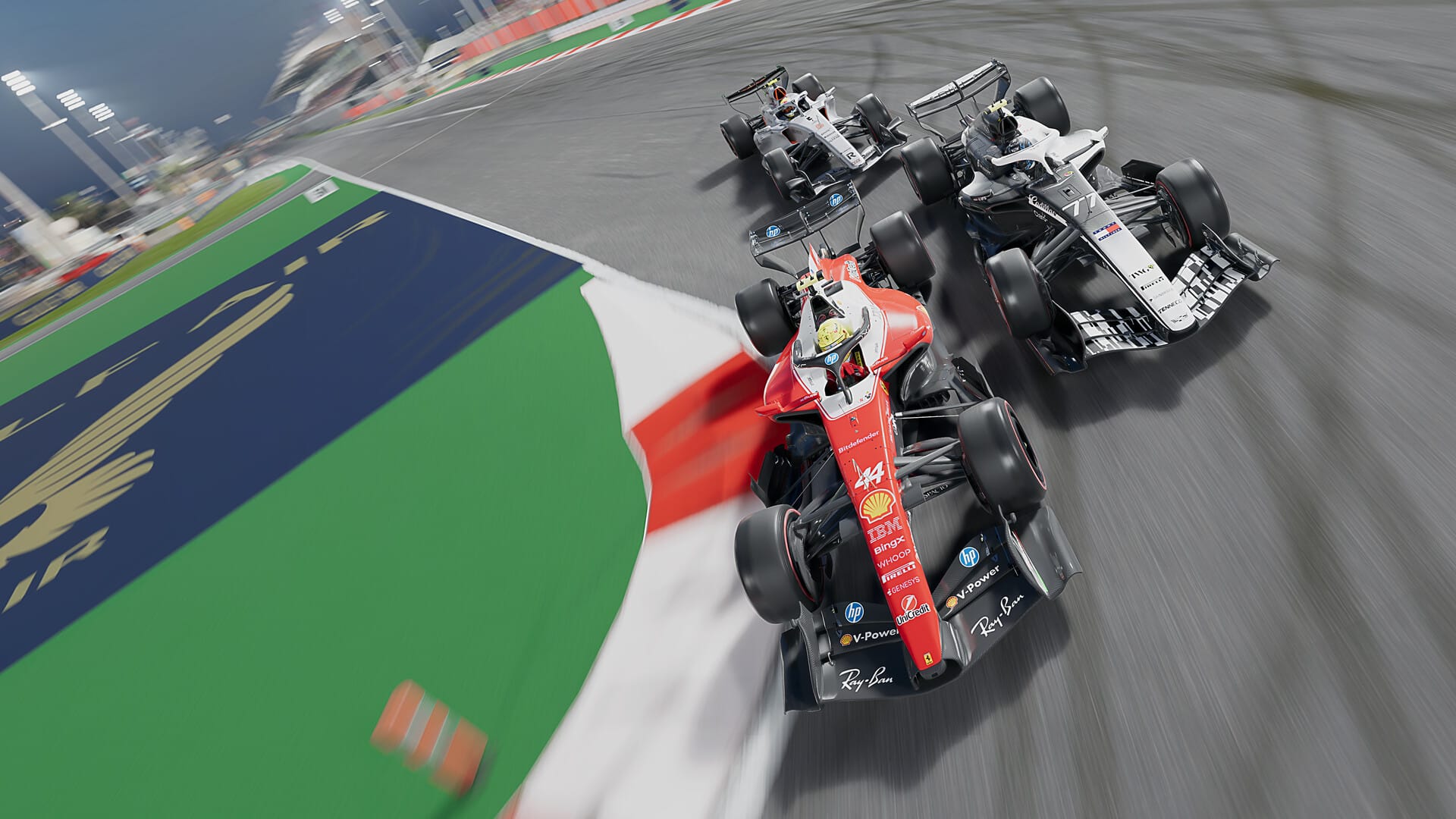
As it clings to road car relevancy and maintains it’s grip on the title of the pinnacle of motorsports, F1 has had some amount of hybrid power since 2009 when it introduced a small battery pack that was good for about 8 seconds of extra power per lap. That grew and evolved into the 2014 engine regulations, which helped solidify the current way we talk about power in F1. Drivers must harvest electrical power from the rear axle by braking or lifting and coasting to convert that waste energy back into usable power, and then either let their car automatically or strategically deploy power when needed. For 2026, the electric power is now a far higher part of the power units total output, which has lead to some unique challenges.
While the last generation of F1 cars were also hybrids, I don’t think I ever found myself fully draining a battery outside of a qualifying lap. So easy was it to just set one of the default deployment modes, and then just fall into the rhythm of a race that I would often be told by my digital race engineer that I needed to burn MORE battery even, lest I leave precious energy on the table. Not once did I hear that message in F1 26, and in fact, I don’t think I have ever experienced such a mental load while playing any racing game that isn’t a full blown hardcore sim like iRacing.
With the new hybrid systems, you must be consciously harvesting and deploying energy if you want to keep up with the cars around you, and to maintain the sort of consistent pace that wheel to wheel racing demands. While you could always lift and coast before a corner in previous titles, and would need to at times, it was mostly for fuel economy or tire saving reasons. This year? Well, let’s just say that at China, my second race out, I managed to fumble a podium scoring finish to barely finishing in the points all because I exhausted my battery too early and couldn’t get enough charge back to maintain my position. Punishing, yes, but so rewarding when you get your head around it.
Another change from last year to this year is the lack of DRS, the overtaking aid that helped F1 drivers within a second of the car ahead by having select straights that would allow them to open a slot in their rear wing, shedding downforce and drag to let them hit even higher top speeds. Added in the early 2010s to help overtaking, it was often seen as a band-aid to regulations that had made passing harder and harder, as wake turbulence from the car in front would often destabilize the following cars. However, this doesn’t mean F1 has abandoned the concept of active aero, and in fact, that’s the second component of mental load that’s been added to the racing this year.
Straight mode, which is available to every single driver, every single lap (at least in dry conditions) now opens both the front and rear wings, shedding almost all of your drag in the straight line. While there to help overtaking, it’s also there because otherwise the energy starved powertrains would need even more help to get to their original target of an even 50/50 split of power from the internal combustion engine, and the battery pack. The catch? Unless you set it to operate automatically, you must press what used to be the DRS button up to five times a lap on certain tracks. Forget to press it and watch the cars around you disappear into the distance, and watch your battery drain even faster.
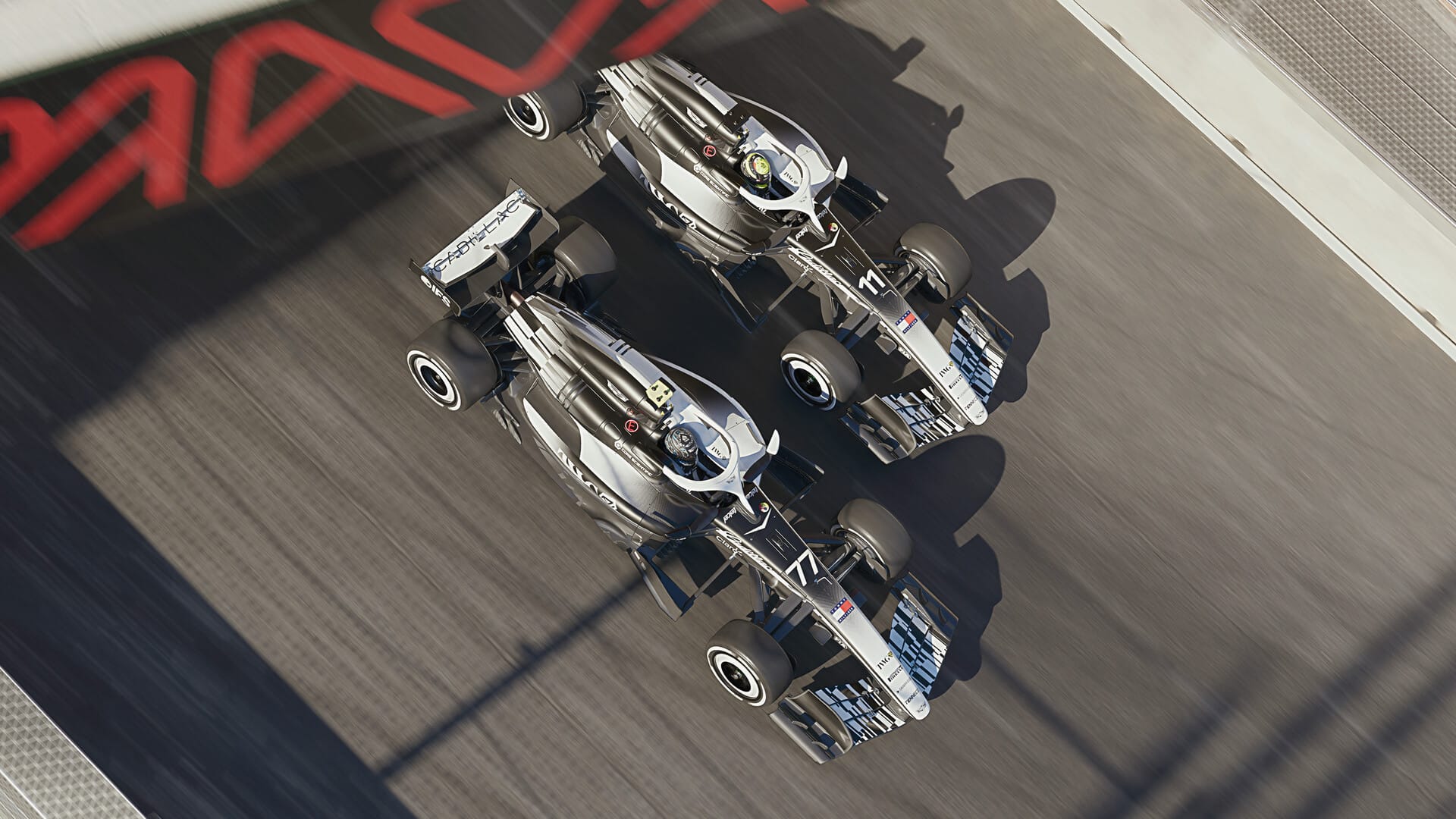
Also in the mix is overtake mode which the series has stylized as Boost Mode, which replaces DRS as your extra little something you get you out of the dirty air of the car ahead, and able to make the move. This however, is all battery based, and will both give you more power, more ability to recharge, but, I often found myself tempted to get greedy, and without patience I was blowing my battery on a straight, powering past my opponent, only to be swallowed back up on the next opportunity by the same car. This has led to the real life F1 drivers calling this Yo-Yo racing, which, while fair, I think makes it sound a bit more silly than it actually is in practice.
My first couple of races, trying to manage all the new modes and settings was a bit of a mixed bag. But instead of being discouraged, I was driven to improve my technique, and felt encouraged that even while racing the AI, I was thinking about my next moves laps ahead of actually making them. Strategy has always been an important part of F1, especially if you’re doing real race distances, but that’s mostly about optimizing your fuel usage and when your pitstops will be. Here, the macro strategy shifts to become about how you deploy your battery around a lap, what corners you choose to not take flat out so you can attack another part of the track where power is going to be more important. While F1 26 lacks the insane level of minutia and detail in settings that the real drivers have on offer, I think the game does a good job of at least emulating the level of mental load that these changes have added to the racing.
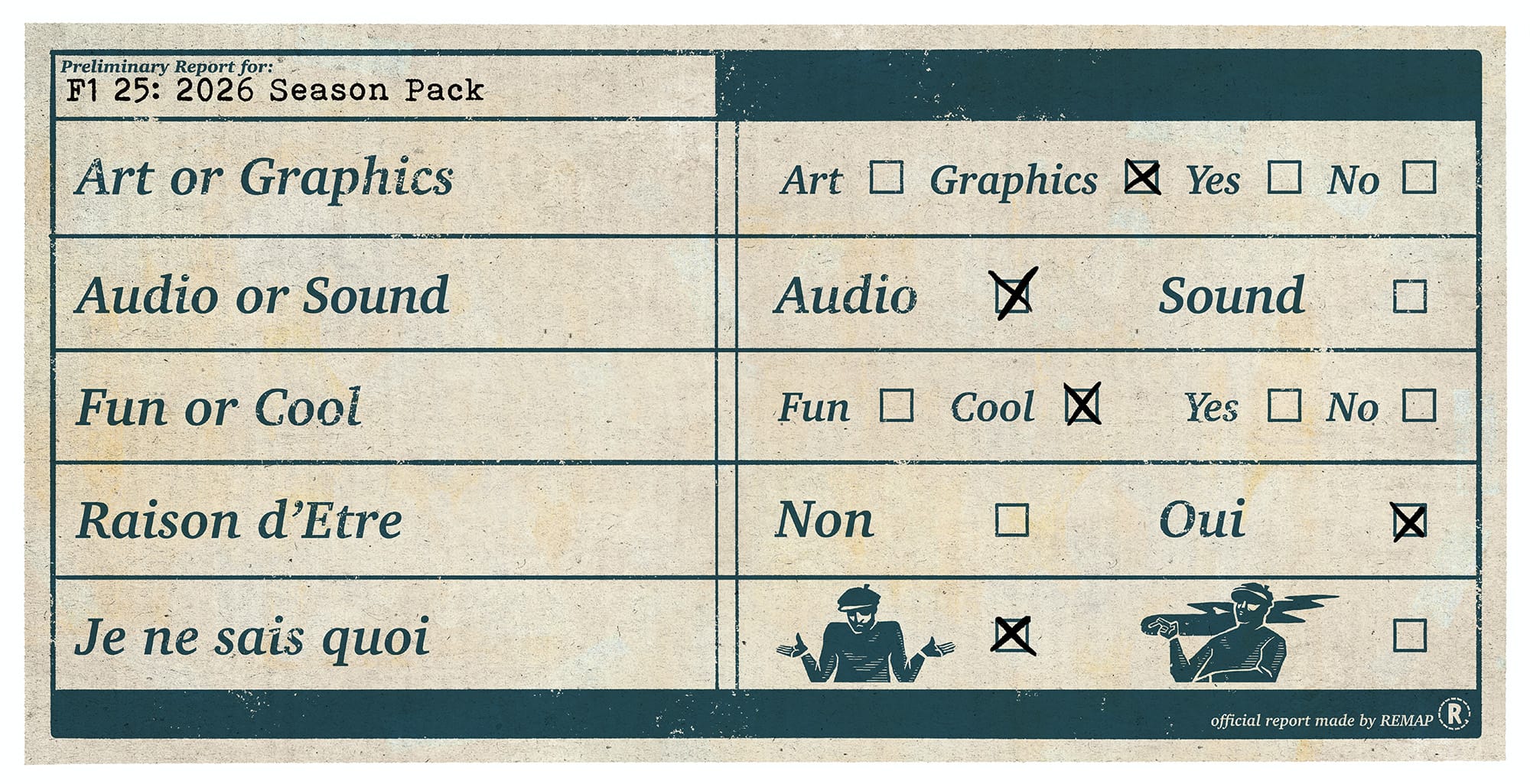
The same things that I think make this ruleset so fraught for the drivers in real life, I think make this DLC a fascinating, worthy purchase for anyone who has been maybe side-eyeing this update for not being a full game. Codemasters should be applauded for being able to roll with most of the punches that F1’s biggest rules shakeup threw at them, while still making a game that’s welcoming to newcomers, and one that has all of the amazing content that shipped with F1 25 in the first place.
While there are signs that the 26 season is still playing with a lot of the backbone of F1 25, I think it’s only fair to forgive certain silly holdovers from the previous game. Some of the new voice lines explaining the new rules are used A LOT, as I imagine they really wanted to hammer home which car type you were driving, as both seasons are just right next to each other in the menus. Also on the silly end of things, if you’re playing as a Red Bull team, you get voice lines about Japan being your engine supplier's home race, which while true previously, I can’t imagine the new Red Bull-Ford Powertrain team in the UK is all too happy about that.
There are also a few less silly issues with the game, but those that I think are understandable: for one, the games calendar and track list will be missing Sepang, as the Bahrain Grand Prix was originally planned to be in Bahrain, until Some Things Happened™ which you might have read about on the news. Though for the first time we now have to ask whether the new Saudi ownership would want Codemasters to properly depict a season that was thrown into chaos both by their long-sought confrontation with Iran and the Houthi militias that the Saudis have been fighting a proxy war against for over a decade. And who says sports and games aren’t political?
Also, in my experience, while there are differences between chassis, I found all the power units to behave about the same, despite each of them having shown some unique characteristics across the course of the real F1 season. That's disappointing given that the differences between power-units have been so pronounced this season and have played a huge role in making Mercedes dominant in the sport again, but those characteristics became apparent from March into September and Codemasters had to finish this by June.
Codemasters under EA has not had the easiest time, but as they have become a one game studio with last year’s layoffs and announcement that they were walking away from their excellent series of Dirt games, I do think they’ve done some of their best work in the last two years and it's hard not to worry about the studio's future under post-buyout EA. Still, this is a surprisingly thorough expansion for the 2026 season, far more than the placeholder it seemed like it might be. It certainly suggests that the decision to forgo a full game this year will lead to another wonderful game next year.